 MochiSim
August 3, 2026
How to Spend 7 Days in South Korea
Spend your first three days in Seoul, travel south on day four, and use Busan as your base for the rest of the week, with Gyeongju as the best optional excursion. If your flights allow it, arrive in Seoul and depart from Busan; otherwise, leave enough time to return to Seoul without turning your final day into a railway-themed panic.
Is seven days enough for Seoul and Busan?
Yes, seven days is enough for the highlights of Seoul and Busan, provided you resist adding every interesting place between them. Three days in Seoul and two full days in Busan gives you time to explore rather than simply photograph a station sign and move on.
The main complication is geography. Seoul sits in the northwest, while Busan is on the southeast coast. High-speed trains make the route straightforward, but returning to a Seoul airport still consumes part of your final day. An open-jaw flight, arriving in Seoul and leaving from Busan, creates the cleanest itinerary.
If both flights use Seoul, consider returning from Busan on the evening of day six. It sacrifices a little coastal time, but it protects you from a missed flight if weather, railway disruption or your own optimistic scheduling intervenes.
What is the best day-by-day route?
The most balanced route combines Seoul’s historic centre and neighbourhoods with Busan’s markets and coast, then uses one day for either Gyeongju or more time by the sea.
Day 1: Arrive and ease into Seoul. Check in, then keep your plans close to the hotel. A walk beside Cheonggyecheon works well if you are staying centrally, while Hongdae is convenient for an informal first meal and an early night. Your body may believe it is breakfast time. Let it have noodles.
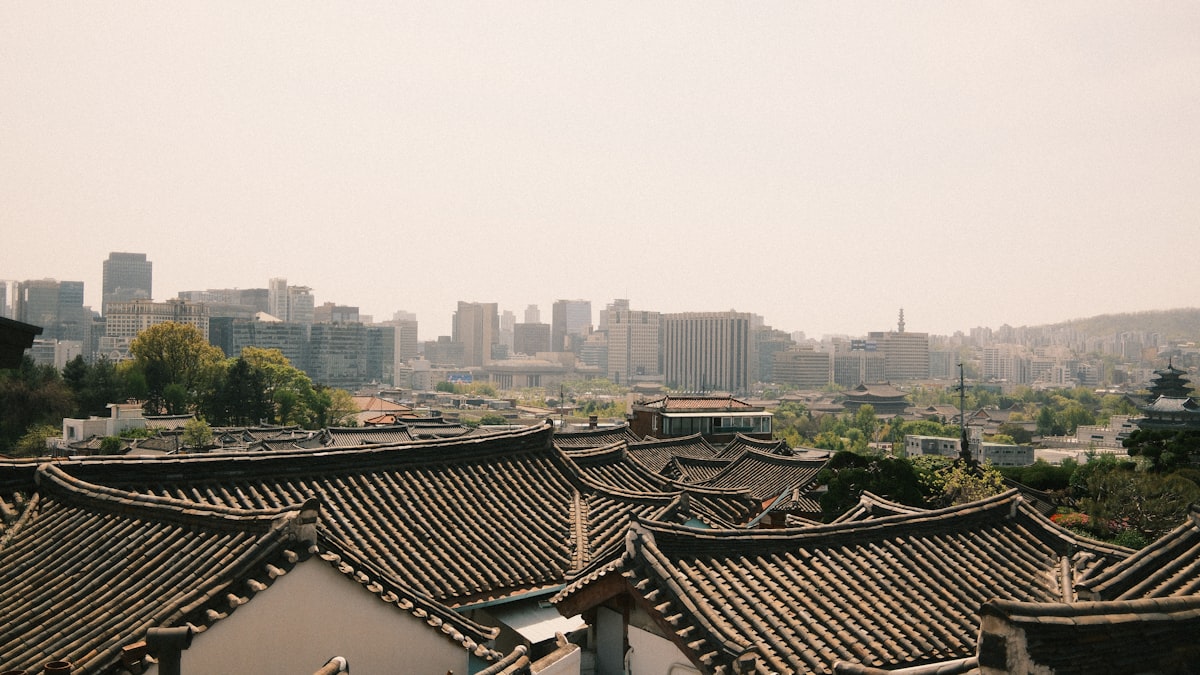
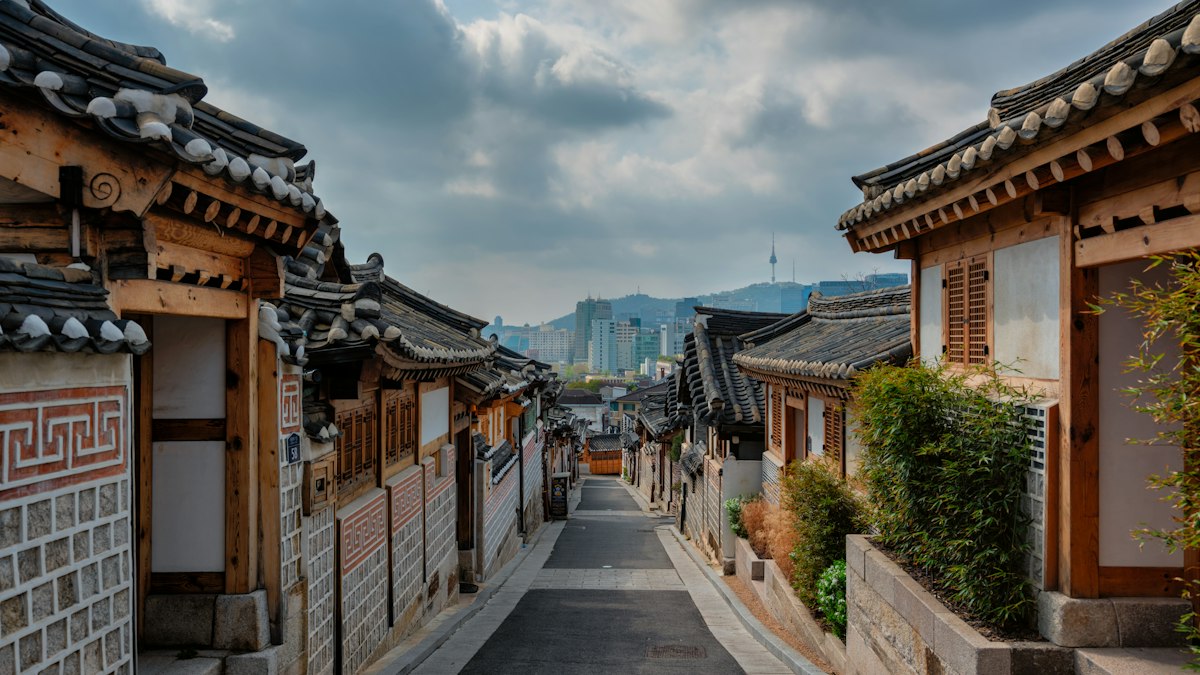
Day 2: Explore old Seoul. Choose one major palace, such as Gyeongbokgung or Changdeokgung, rather than racing through both. Continue towards Insadong for tea shops, crafts and lunch, then wander through Ikseon-dong’s narrow lanes. Bukchon Hanok Village fits geographically, but remember that it is a residential area: keep your voice down and follow any access signs.
Day 3: Pick one side of modern Seoul. For museums and broad river views, visit the National Museum of Korea and nearby Yongsan. For cafés, design shops and a younger evening scene, focus on Seongsu or Hongdae instead. Avoid stitching together distant neighbourhoods merely because they all appeared in the same social-media folder. Seoul is enormous, and crossing it repeatedly eats the day.
Day 4: Take the train to Busan. Reserve a morning high-speed train from Seoul Station, then leave your luggage at your Busan accommodation if check-in is not yet available. Spend the afternoon around Nampo-dong, Jagalchi Market and the waterfront. Gamcheon Culture Village can be added if you still have energy, though its hills feel rather more committed with a suitcase.
Day 5: Visit Gyeongju or stay in Busan. History enthusiasts should make a day trip to Gyeongju for Bulguksa, the royal tombs around Daereungwon and the central historic district. If temples and archaeology are not your thing, stay in Busan for Taejongdae, Songdo or a slower market day.
Day 6: See Busan’s eastern coast. Start around Haedong Yonggungsa, then work back towards Haeundae or Gwangalli. These sights look close on a map but involve meaningful travel, so choose two or three stops rather than attempting the entire shoreline. Finish with the evening view from Gwangalli Beach or dinner near your hotel.
Day 7: Depart or return to Seoul. If you are flying from Busan, keep the morning flexible and check the route to the airport in advance. If your flight leaves from Seoul, returning the previous evening is the cautious option. For a later departure, a morning train may work, but check current schedules and build in a generous buffer.
Should you really add Gyeongju to a short trip?
Gyeongju is worth adding if Korean history is one of your reasons for travelling, but it is not compulsory. The city rewards time outdoors among tomb mounds, temples and archaeological sites; it is less appealing if your priority is nightlife, shopping or an unhurried Busan stay.
For a day trip, decide on your main sights before leaving. Bulguksa lies away from the central tomb and museum area, so trying to see everything can become a day spent waiting for buses. Compare current rail and intercity bus schedules, as the most convenient arrival point depends on where you want to begin. If you take the train, remember that the high-speed station is outside central Gyeongju.
You can also stay overnight in Gyeongju between Seoul and Busan. That gives the historic centre a calmer evening atmosphere, but it means another hotel change and more luggage handling. On a seven-day trip, a Busan-based day excursion is usually simpler.
Travellers tempted to add Jeju should save it for another itinerary. Flying there and back introduces airport transfers and weather-dependent plans, leaving too little time for the three mainland destinations.
How should you plan trains and local transport?
Book your intercity train once your flight and hotel dates are fixed, then use local transport cards and Korean mapping apps within each city. Popular departures can fill, especially around weekends and national holidays, so check the official Korail booking channel rather than assuming you can board whichever train appears next.
For a smoother journey:
- Confirm whether your train leaves from Seoul Station or another terminal.
- Download the ticket or keep an offline copy of the booking details.
- Arrive early enough to find the platform without sprinting.
- Check luggage guidance if you are carrying a large case, as storage space can be limited.
- Use Naver Map or KakaoMap for local routes; their public-transport directions are generally more useful in South Korea than relying on familiar overseas mapping habits.
- Buy or top up a rechargeable local transport card for metro and bus journeys, following the current instructions at the station or convenience shop.
Airport transport depends on your terminal, arrival time and hotel location. Check the airport’s official transport page shortly before travelling, particularly if you land late, when some rail and bus services may have finished.
What should you eat along the route?
Eat dishes associated with each city, but choose by appetite rather than treating meals as a checklist. Seoul is a good place for barbecue, kalguksu noodles, mandu and quick meals such as gimbap. Traditional markets are useful for sampling several things, although the busiest stall is not automatically the one you will enjoy most.
In Busan, look for dwaeji gukbap, milmyeon, eomuk and seafood around the city’s markets and neighbourhood restaurants. Gyeongju is known for baked red-bean pastries and set meals built around rice, soup and side dishes.
If you have allergies or avoid animal products, carry a clearly translated dietary card. Broths, sauces and kimchi may contain ingredients that are not obvious from the English description. Staff will often try to help, but a precise written explanation works better than improvised mime beside a bubbling pot.
How do you stay connected during the trip?
An eSIM can give you mobile data for maps, train details and translation without visiting a phone shop, but you must check that your exact device supports eSIM and is network-unlocked. Compatibility can vary between regional versions of the same phone, so verify the model number in the manufacturer’s settings or documentation.
Travelling to South Korea?
- 3 GB per day · 1 day€5.50
- 1 GB per day · 3 days€6.10
- 1 GB per day · 7 days€7.20
Install the eSIM while you have reliable Wi-Fi, but follow the activation instructions before switching it on. Then:
- Label the travel eSIM clearly in your phone settings.
- Select it for mobile data when instructed.
- Turn off data roaming on your home SIM to avoid unintended roaming use.
- Enable roaming on the travel eSIM if its setup guide requires it.
- Keep the installation details somewhere accessible offline.
- Check whether the eSIM includes only data or also provides a local number.
A data-only connection is usually enough for navigation and messaging apps, but some Korean booking or queue systems may request a local phone number. Check each service before relying on it, and ask your accommodation for help when a reservation form refuses to cooperate.
Travelling to South Korea?
Get an eSIM with instant data and land already connected.
Stay connected wherever you travel
Instant eSIM data plans, wherever you're going. No physical SIM, no roaming surprises.