 MochiSim
August 15, 2026
How Do You Experience Kyoto Without Rushing?
Kyoto is best experienced slowly: choose a few temples, group each day by neighbourhood and leave time for gardens, backstreets and an unplanned bowl of noodles. You will see less on paper but remember far more than if you spend the trip racing between famous gates.
Which Kyoto temples and shrines are worth visiting?
A small, geographically sensible shortlist is better than trying to collect every major temple in the city. Kyoto has an extraordinary concentration of religious sites, but after the fifth hurried rock garden, even a keen visitor may struggle to feel appropriately contemplative.
Start with places that offer different experiences:
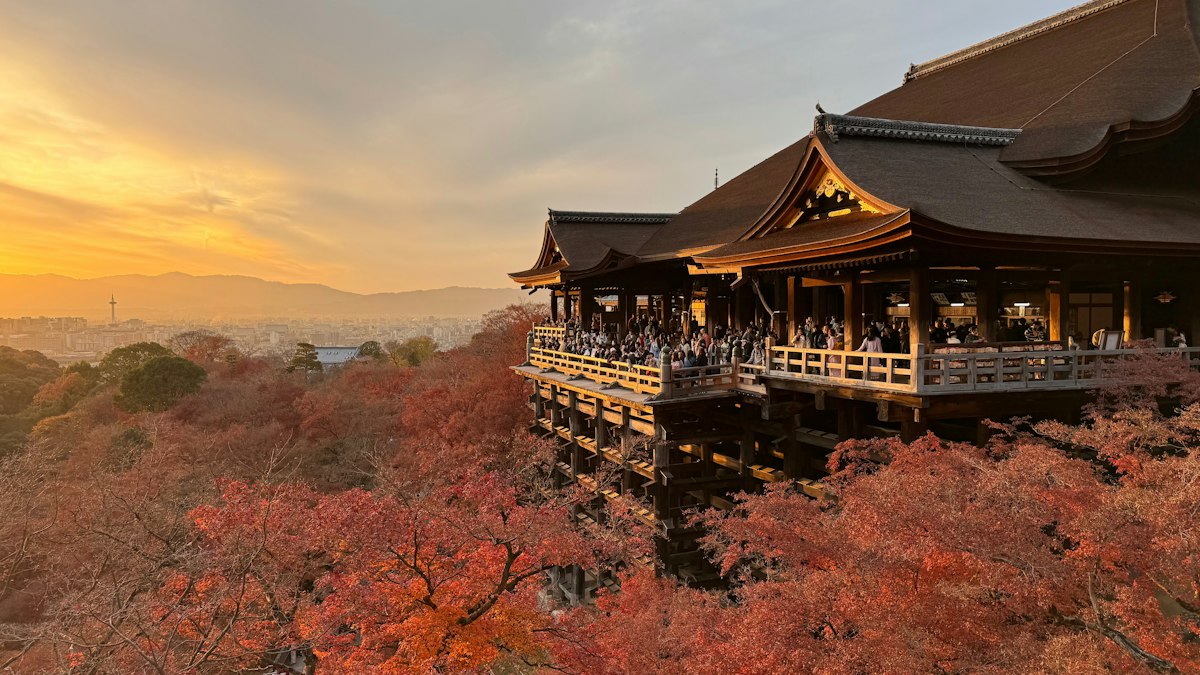
- Kiyomizu-dera combines a hillside setting, a broad wooden terrace and an atmospheric approach through Higashiyama.
- Kinkaku-ji, the Golden Pavilion, is visually striking and easy to appreciate even during a relatively short visit.
- Ginkaku-ji, the Silver Pavilion, is more restrained, with carefully composed gardens and access to the Philosopher’s Path.
- Nanzen-ji has spacious grounds and sits near several pleasant walking routes in eastern Kyoto.
- Ryōan-ji is known for its dry garden and rewards patience more than a quick photograph.
- Fushimi Inari Taisha is a shrine rather than a temple. Its tunnels of vermilion torii gates continue up wooded Mount Inari.
Check official websites before setting out because entry arrangements, access and opening times can change. Early mornings are usually calmer at the most famous sites, while lesser-known sub-temples can offer breathing room later in the day.
A workable eastern Kyoto day might look like this:
- Begin at Kiyomizu-dera before the surrounding lanes become busy.
- Walk through the preserved streets of Sannenzaka and Ninenzaka without treating them as an obstacle course.
- Continue towards Yasaka Shrine and Maruyama Park.
- Stop for lunch rather than squeezing in another distant landmark.
- Spend the afternoon around Nanzen-ji or the Philosopher’s Path.
- Return to Gion near dusk, when the lanterns begin to matter more than your checklist.
Where can you see Kyoto’s traditional neighbourhoods?
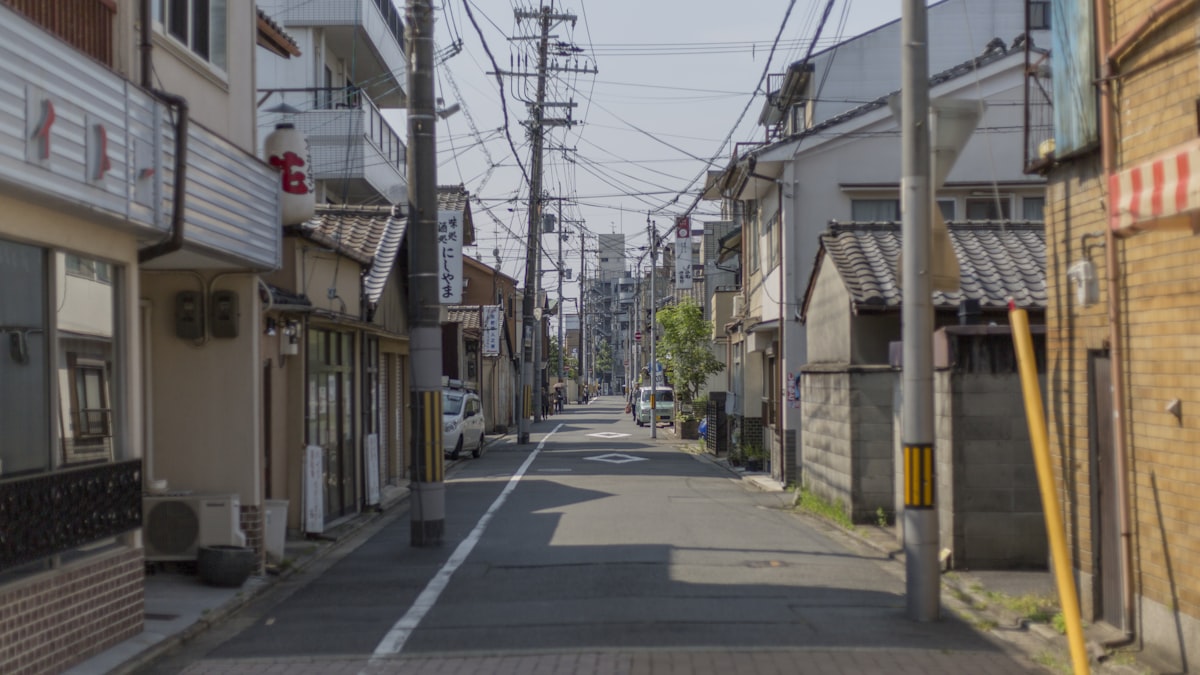
Gion, Higashiyama and Nishijin are the best-known areas for traditional streets, wooden townhouses and long-established crafts. They are living neighbourhoods, though, not historical sets arranged for visitors.
Southern Higashiyama is the easiest place to combine temples with preserved streets. The lanes near Kiyomizu-dera are beautiful, but also heavily visited. Step a few streets away from the main route and the noise often drops surprisingly quickly.
Gion is associated with Kyoto’s geiko and maiko communities. Hanamikoji and the Shirakawa canal area are lovely for an evening walk, but privacy rules and photography restrictions should be taken seriously. Do not block doorways, pursue performers or treat someone travelling to work as a public attraction.
Nishijin, historically linked with textile production, has a quieter, more everyday character. Workshops and machiya townhouses are scattered through the area rather than concentrated along one obvious sightseeing street, so it suits travellers who enjoy wandering with a map and modest expectations.
Ponto-chō is a narrow dining lane near the Kamo River. It becomes particularly atmospheric after dark, although individual restaurants vary in how easy they are to enter without a reservation or Japanese-language assistance.
Which cultural experiences are genuinely worthwhile?
Choose one cultural activity you are curious about rather than booking a full parade of supposedly authentic experiences. A thoughtful tea gathering or craft workshop can reveal more about Kyoto than watching several abbreviated demonstrations back to back.
Options commonly available around the city include:
- A tea ceremony with an explanation of the utensils, gestures and seasonal details
- Calligraphy, incense or flower-arranging sessions
- Kimono dressing and a walk through a suitable neighbourhood
- Workshops involving ceramics, textiles, sweets or traditional paper
- Zen meditation sessions offered by participating temples
- Performances featuring classical music, dance or theatre traditions
Look for activities that explain context rather than merely supplying a costume and a photo. Check whether instruction is available in a language you understand, what level of physical mobility is required and whether photography is welcome.
Temple stays are more commonly associated with destinations outside central Kyoto, although some religious lodgings and morning-practice opportunities exist in the wider region. Read the rules carefully. Early starts, shared facilities and quiet routines are part of the experience, not shortcomings waiting to be corrected in a review.
How do you get around Kyoto efficiently?
Trains and the subway are useful for longer hops, while buses, walking and occasional taxis fill the gaps. The city looks compact on a map, but temples spread across its edges can turn an ambitious itinerary into a day spent watching traffic.
Group sights by area rather than fame. Arashiyama belongs on a different block from eastern Kyoto, while Fushimi Inari pairs more naturally with southern destinations or a rail journey towards Nara. Northern landmarks such as Kinkaku-ji also deserve their own cluster.
Buses reach many places that rail does not, but popular routes can become crowded and road traffic can slow them down. Rail is often more predictable where a station is convenient. Rechargeable transport cards are accepted across much of the local network, though you should check the operator and route rather than assuming universal acceptance.
Walking is part of Kyoto’s appeal. Wear shoes that cope with stone steps, gravel gardens and longer distances than your phone initially suggests. Cycling can work well in flatter districts, but parking rules matter and crowded pedestrian lanes are not the place to practise your bell-ringing technique.
Mobile data helps with platform changes, walking directions and checking whether a temple has altered its access arrangements. Before travelling, confirm that your phone is unlocked and supports eSIM, then install your eSIM while you still have dependable internet access. Keep the activation details somewhere available offline and check which SIM is selected for mobile data after landing.
Travelling to Japan?
- 3 GB per day · 1 day€5.90
- 3 GB per day · 3 days€7.90
- 1 GB per day · 7 days€8.10
When is the best season to visit Kyoto?
Kyoto is rewarding throughout the year, but each season changes the atmosphere, crowds and practical demands. There is no secret month in which the maples are perfect, the weather is flawless and everyone else has politely stayed home.
Spring brings blossoms and seasonal temple displays. Flowering dates vary with the weather, so treat forecasts as guidance rather than a contract. Famous viewing areas can become extremely busy.
Summer is hot and often humid, with vivid greenery and major seasonal traditions. Plan outdoor sightseeing for earlier or later in the day, carry water and build in indoor pauses. Temple gardens are considerably less poetic when you are quietly overheating.
Autumn draws visitors for changing leaves, particularly at temples with landscaped gardens or evening illuminations. Colours develop at different times according to elevation, exposure and weather.
Winter is colder and often quieter outside holiday periods. Bare gardens reveal their structure, and occasional snow can transform the city, though it should never be assumed. Some attractions may operate differently, so check before making a long cross-city journey.
Whenever you visit, compare official event and foliage information close to departure. Seasonal conditions are among the least sensible parts of a trip to plan months in advance with absolute confidence.
Is Kyoto too crowded to enjoy?
No, but enjoying Kyoto requires accepting that its most famous sights attract crowds and planning around that reality. Complaining that Kiyomizu-dera has visitors while standing there as a visitor yourself is emotionally understandable, if not entirely watertight.
You can make the city feel calmer by changing your timing and scale:
- Visit one headline sight early, then move to nearby secondary temples.
- Stay in one district for several hours instead of commuting between icons.
- Walk beyond the busiest entrance streets and shopping lanes.
- Visit gardens in light rain, when stone, moss and wet timber look particularly good.
- Spend an evening beside the Kamo River or along a residential canal.
- Avoid staging long photo sessions where other people need to pass.
Arashiyama is a good example. The bamboo grove is compact and popular, but the wider district includes temples, riverside paths and quieter streets. Arriving only for one photograph means experiencing the crowd while missing much of the place.
What mistakes should first-time visitors avoid?
The biggest mistakes are overloading each day, crossing the city repeatedly and forgetting that Kyoto’s cultural sites have rules as well as scenery. A little preparation prevents most awkward moments.
- Do not plan by attraction ranking alone. Plot locations before assigning them to a day.
- Do not assume every site stays open into the evening. Confirm current hours and last admission on official pages.
- Do not photograph people without permission. This matters especially around working geiko and maiko districts.
- Do not enter restricted lanes or private property. A picturesque doorway is still someone’s doorway.
- Do not ignore temple etiquette. Follow signs, remove shoes where requested and keep voices low in worship spaces.
- Do not rely entirely on live navigation. Save your accommodation address, key stations and essential booking details offline.
- Do not leave restaurant decisions impossibly late. Popular or very small places may require advance planning, while many excellent casual options do not.
- Do not schedule every hour. Kyoto’s best detour may be a tiny garden, a riverside bench or a shop where the owner is delighted that you noticed the woodblock prints.
Travelling to Japan?
Get an eSIM with instant data and land already connected.
Stay connected wherever you travel
Instant eSIM data plans, wherever you're going. No physical SIM, no roaming surprises.