 MochiSim
October 12, 2026
How Do You Get Around Japan? Trains, IC Cards and the Rail Pass
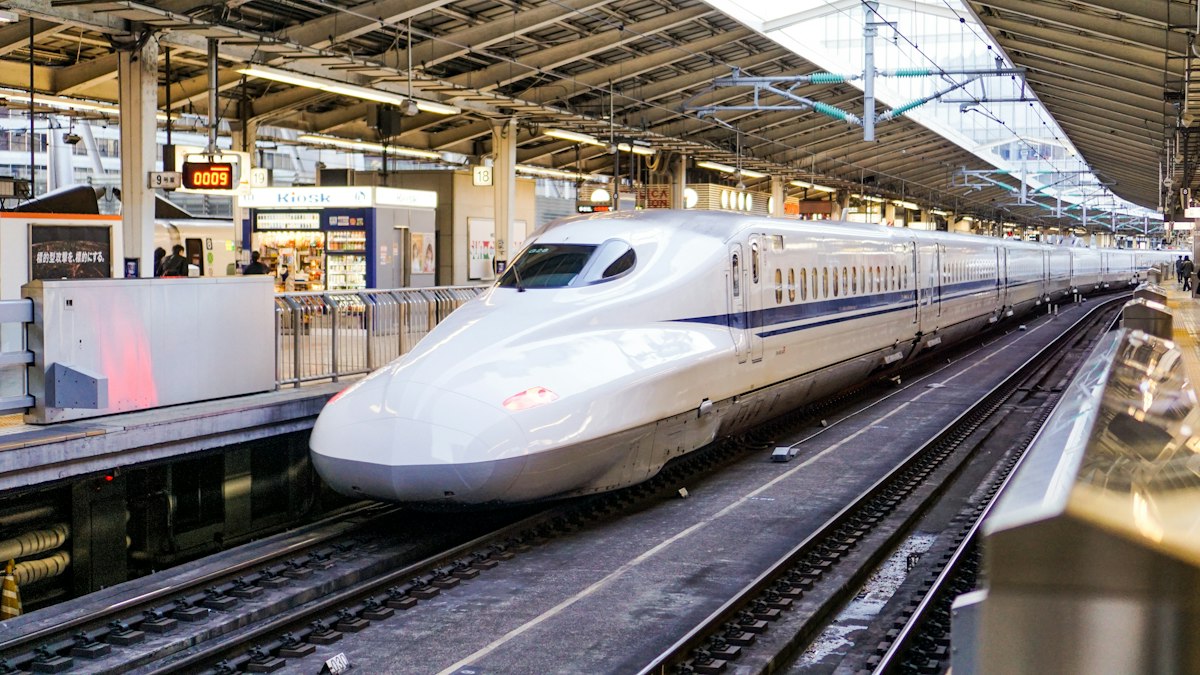
You get around Japan by train between cities and by tapping an IC card on local metros, trains and buses. A rail pass is optional and only pays off on certain itineraries. Add a way to check routes on your phone and the system is easier than it looks.
Most first trips follow the same line: Tokyo, Kyoto, Osaka, maybe Hiroshima. That means a few long Shinkansen rides and a lot of short local hops. The two jobs need different tools, and mixing them up is where travellers lose time and money.
How do you book the Shinkansen?
You have three routes: online, at a ticket machine or counter, or by tapping in with an IC card on some services. Which one you use depends on the line.
For the Tokaido, Sanyo and Kyushu lines (Tokyo to Kyoto, Osaka, Hiroshima and Fukuoka), the operator's app and site is SmartEX. It sells reserved and non-reserved seats and lets you board with a QR code or a registered IC card. Seats are confirmed about a month ahead, but reservations open earlier than that. Booking online with a foreign card can fail at the card verification step, so have a plan B.
For northern lines such as Tohoku and Hokuriku, JR East has its own reservation service. JR West has one for its western routes, and some of its tickets need collecting from a station machine.
Plan B is simple: staffed counters and multilingual machines at big stations can handle bookings in person. In peak periods such as Golden Week, Obon and New Year, book ahead.
What is the difference between reserved and non-reserved cars?
Reserved cars guarantee a seat on a specific train. Non-reserved cars are first come, first served, and are cheaper, but you can end up standing at busy times. Check the platform signs for which cars are which.
For a first trip, reserve the long legs, especially Tokyo to Kyoto or Osaka, and any train that matters for a flight. Non-reserved is fine for off-peak, short rides.
Big suitcases are the other consideration. Oversized luggage rules exist on some Shinkansen services, so check the operator's current policy if you are carrying anything large.
Which IC card should you get: Suica, ICOCA or PASMO?
Any of them. Suica (JR East, Tokyo), PASMO (Tokyo private lines and metro) and ICOCA (JR West, Kansai) work across most of the country's trains, metros, buses and many shops and vending machines showing the IC logo. You do not need a separate card per city, but you can't cross between regional areas on a single tap. Tap out, then tap in again.
Physical cards are sold at airport and station machines and counters, though availability has varied in recent years, so do not count on one being in stock. The phone route is easier:
- iPhone: add Suica or PASMO to Apple Wallet if you have a recent model, or use JR East's Welcome Suica Mobile app made for visitors. The app is valid for a limited period and has been iPhone only.
- Android: Google Wallet Suica needs a phone with Japan's mobile wallet feature (osaifu keitai), which most phones sold outside Japan lack. A physical card is the safer bet.
Availability and rules change, so check the JR East and Apple pages before you fly. Also note that Apple Wallet Suica refunds are awkward for visitors, so load only what you expect to use.
IC cards generally cover the base fare on the Shinkansen, not the seat surcharge, so you still need a booking for that.
Is the Japan Rail Pass worth it?
It depends on arithmetic, not vibes. Add up what you would pay for each long train ride on your itinerary, plus any airport transfer, and compare it with the pass price on the official Japan Rail Pass site. If the pass is lower, buy it. If not, skip it.
It tends to help on a fast, multi-city loop covering lots of distance in a short time. It tends not to help if you are based in one city with day trips, or you only do Tokyo to Kyoto and back. Regional passes can beat the national one if you stay in one area.
Two things to check before you commit: which trains the pass actually covers, because some fast services have had restrictions, and how seat reservations work with it. Local metros and many city buses sit outside JR, so you will still need an IC card.
How do metros and buses work in Tokyo, Kyoto and Osaka?
In Tokyo, the metro and JR lines form a dense web and an IC card makes it painless. Station names and line colours are in English, and a route app tells you which exit to take, which matters in big stations.
In Kyoto, the rail network is thin, and buses reach most temples. IC cards work on them. Tap on when you board or when you exit, depending on the bus type, and watch the signs. Buses can be crowded in peak season, so a short train or taxi ride is sometimes faster.
In Osaka, the metro is the easiest way around, with JR loop lines and private railways filling the gaps. Again, one IC card covers it all.
Can you send your luggage ahead?
Yes, and it is one of the better tricks in Japan. Luggage forwarding (takuhaibin) lets you send a suitcase from an airport counter, convenience store or your hotel to your next hotel, usually arriving the next day. Ask your hotel first, as some smaller ones lack storage space.
Pack a small bag for the night in between and move through crowded stations without the big case. It is especially handy for the Tokyo to Kyoto leg and for airport arrivals.
Why does mobile data matter for getting around, and how do you set it up?
Route apps do the heavy lifting in Japan. They tell you the platform, the car position, the transfer time and the last train, and they update live when things change. Offline maps help, but live data is what saves you when a line is delayed or you take a wrong exit.
Quick phone checklist before you go:
- Your phone supports eSIM
- It is carrier-unlocked
- The software is up to date
Travelling to Japan?
- 3 GB per day · 1 day€5.90
- 3 GB per day · 3 days€7.90
- 1 GB per day · 7 days€8.10
Install the eSIM before you leave or on arrival over Wi-Fi, then switch on data for the travel line when you land. MochiSim eSIMs are data only, with no number, calls or SMS. Keep your home SIM active as the second line so verification texts from your bank still arrive, and turn off data roaming on it to avoid surprise charges.
Travelling to Japan?
Get an eSIM with instant data and land already connected.
Stay connected wherever you travel
Instant eSIM data plans, wherever you're going. No physical SIM, no roaming surprises.