 MochiSim
July 22, 2026
What Should You Know Before Visiting Ho Chi Minh City?
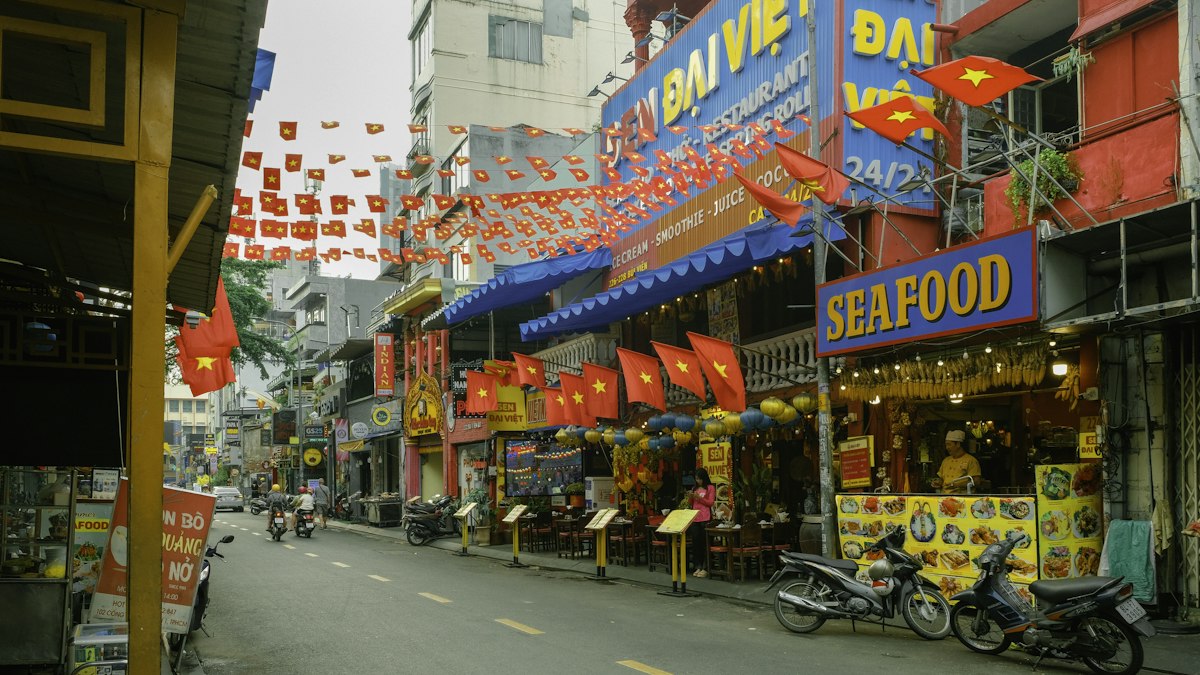
Ho Chi Minh City is busy, hot, food-obsessed and easier to enjoy once you stop trying to conquer it all at once. Base yourself near the places you want to visit, allow extra time for traffic, and balance museums and landmarks with unhurried meals and neighbourhood walks. You may still call it Saigon, as many locals do, particularly when referring to the central city.
What makes Ho Chi Minh City worth visiting?
Ho Chi Minh City rewards you with layers of history, energetic street life and some of Vietnam’s most enjoyable eating. The city can look relentlessly modern from a taxi window, but its past appears in old shopfronts, incense-filled temples and buildings inherited from the French colonial period.
The settlement grew into an important regional trading centre before becoming French colonial Saigon. It later served as the capital of South Vietnam until the end of the Vietnam War in 1975 and was officially renamed Ho Chi Minh City the following year. That history remains politically and emotionally complex, so museums are best approached as places presenting particular perspectives rather than the final word on every event.
Good starting points include:
- The War Remnants Museum, for photographs, military exhibits and accounts of the war’s effects. Some galleries are distressing, so do not rush them.
- Independence Palace, where preserved rooms and underground spaces help make twentieth-century history tangible.
- The Central Post Office, an elaborate colonial-era building that remains part of the working city.
- Notre-Dame Cathedral Basilica of Saigon, a major landmark whose access may be affected by restoration; check locally before planning around an interior visit.
- Nguyen Hue Walking Street, best experienced when residents emerge for an evening stroll.
- Cholon, the historic Chinese quarter, where markets, medicine shops and temples reveal another side of the city.
Choose a few rather than collecting landmarks like airport stamps. A shaded coffee stop between museums is not wasted time here.
Which neighbourhood should you stay in?
District 1 is the simplest base for a first visit, but other neighbourhoods offer quieter streets, stronger local character or a different kind of evening. Ho Chi Minh City is enormous, and staying far from your main interests can turn each day into a study of brake lights.
- District 1 puts major sights, restaurants, hotels and nightlife close together. It is convenient, lively and rarely subtle.
- District 3 feels more residential while remaining near the centre. Look here for tree-lined streets, older villas, cafés and local restaurants.
- District 5 and Cholon suit travellers interested in temples, markets and the city’s Chinese-Vietnamese heritage. Travel time to central attractions can be longer.
- Binh Thanh mixes dense local neighbourhoods with newer developments and gives you relatively easy access to central districts.
- Thao Dien has international restaurants, riverside venues and a slower atmosphere. It can be appealing for longer stays, though it is removed from many historic sights.
Check the location on a map rather than relying on a hotel’s use of words such as “central”. Also read recent comments about street noise. A room above an enthusiastic karaoke session can make proximity feel less clever by midnight.
What should you eat in Ho Chi Minh City?
You should try southern Vietnamese specialities, but leave room for Chinese-Vietnamese dishes and recipes brought to the city from elsewhere in the country. Eating well does not require a grand plan: busy stalls and simple family restaurants are often the memorable ones.
Look for:
- Cơm tấm, broken rice commonly served with grilled meat, pickles and fish sauce.
- Hủ tiếu, a southern noodle dish served dry or with broth in several regional styles.
- Bánh xèo, a crisp savoury pancake filled with ingredients such as pork, prawns and bean sprouts, then wrapped with herbs.
- Bánh mì, filled baguettes suited to breakfast, lunch or the moment you realise dinner is still hours away.
- Phở, available in both northern and southern styles, with the southern version often accompanied by generous herbs.
- Cà phê sữa đá, strong iced coffee with condensed milk.
Choose stalls with steady turnover, food cooked in front of you and ingredients protected from traffic and heat. If you have allergies or dietary restrictions, save a Vietnamese translation on your phone and show it before ordering. Words such as “vegetarian” do not always exclude fish sauce, stock or egg, so list the ingredients you cannot eat.
How do you get around without losing half the day?
Ride-hailing services, metered taxis, buses and the metro can all be useful, but no single option covers every journey neatly. Walking works within compact areas, although heat, uneven pavements and determined traffic make distances feel longer than they look.
For a straightforward journey:
- Check the route on a live map. Traffic conditions and road restrictions can change which option makes sense.
- Compare car, motorbike and public transport routes. A motorbike may move more easily through congestion, but it is not suitable for everyone or for bulky luggage.
- Use the official app or a recognised taxi operator. Confirm the vehicle registration before getting in and keep the trip visible on your phone.
- Wear the provided helmet on a motorbike ride. If it does not fit securely, do not set off.
- Allow a generous buffer for the airport or a timed booking. A short distance on the map can become a slow journey during busy periods or heavy rain.
The metro serves part of the city rather than every visitor area, so consult the current network map and operating information. Buses cover far more ground but may be harder to interpret without mobile data.
When crossing a busy road, use a marked crossing where possible. Move steadily, stay visible and avoid sudden changes of direction. Following local pedestrians can help, but do not outsource all judgement to a stranger carrying six bags of soup.
What is nightlife in Ho Chi Minh City actually like?
Nightlife ranges from pavement drinks and live music to polished cocktail bars, rooftop venues and booming clubs. You can have a sociable evening without going anywhere near the loudest streets.
Bui Vien Walking Street is the famous backpacker strip, and it delivers noise, crowds and flashing signs with impressive commitment. Visit if that spectacle appeals; otherwise, explore cocktail bars and music venues around District 1, cafés and neighbourhood bars in District 3, or riverside spots farther east.
Dress expectations vary, particularly at rooftop bars and clubs, so check the venue’s current rules. Keep an eye on your drink, use a trusted ride home and confirm the vehicle before getting in. Late at night, convenience is a better guide than bravado.
Is the city too hectic for a first visit?
Ho Chi Minh City can feel overwhelming on day one, but it becomes manageable once you plan by area and stop treating every street crossing as a personal duel. The noise is real. So are the heat, humidity and sudden downpours, depending on the season.
Build each day around one part of the city and schedule indoor stops during the hottest hours. Lightweight clothing, comfortable closed or secure shoes, sun protection and a compact rain layer are more useful than an ambitious outfit. Temples and religious sites may expect shoulders and knees to be covered.
Petty theft is a more realistic concern than dramatic danger for most visitors. Keep your phone away from the road edge, carry bags on the side away from traffic and do not leave valuables loose on café tables. If someone creates urgency around money, transport or an unexpected problem, pause and verify what they are telling you.
What practical details should you sort out before arrival?
You should arrange your documents, connectivity and first journey before flying, then check current official guidance close to departure. Rules can change, and advice remembered from somebody’s trip several years ago is not a reliable border policy.
Before you leave:
- Check passport and entry requirements with an official Vietnamese government or embassy source.
- Save your accommodation address in Vietnamese for the airport transfer.
- Tell your bank you are travelling if required, and carry more than one payment method.
- Use filtered or sealed drinking water rather than assuming tap water is suitable.
- Download offline maps and Vietnamese language support.
- Save copies of your passport, insurance details and important bookings separately from the originals.
Mobile data is particularly useful for navigation, translation and checking a ride’s registration at the taxi queue. An eSIM can remove the need to find a physical SIM after landing, but your phone must support eSIMs and be network-unlocked. Check the device manufacturer’s specifications, your exact model number and your mobile provider’s lock status before buying.
Travelling to Vietnam?
- 1 GB per day · 3 days€6.20
- 3 GB per day · 1 day€6.30
- 5 GB for the whole plan · 3 days€7.10
Install the eSIM while you still have reliable Wi-Fi, but follow its activation instructions carefully because some travel eSIMs should not connect until you reach Vietnam. Keep your home SIM disabled for mobile data if you want to avoid unintended roaming, while leaving it available for messages only if your provider’s terms make that sensible.
Travelling to Vietnam?
Get an eSIM with instant data and land already connected.
Stay connected wherever you travel
Instant eSIM data plans, wherever you're going. No physical SIM, no roaming surprises.