 MochiSim
July 23, 2026
What Should You See, Eat and Do in Hanoi?
Hanoi is best explored through its contrasts: begin in the Old Quarter, eat what is being cooked beside you, then make time for temples, museums and the quieter streets around the lakes. You can cover the headline sights in a short visit, but leave space for early-morning walks, long lunches and the occasional wrong turn.
The city can feel noisy at first. Give it a few hours and the apparent chaos starts revealing a rhythm, particularly once you learn how to cross the road without treating every scooter as a personal enemy.
How should you explore Hanoi’s Old Quarter?
The best way to explore the Old Quarter is on foot, one small cluster of streets at a time. Trying to march through it with a rigid checklist rather misses the point.
Start near Hoan Kiem Lake, which gives you an easy landmark whenever the lanes begin to blur together. From there, wander north into streets lined with food stalls, cafés, workshops and narrow tube houses. Some roads still carry names linked to the goods once sold there, though modern shops have naturally mixed things up.
Look beyond the ground-floor businesses. Balconies, faded façades and tiny shrines squeezed between buildings tell as much of the story as the obvious sights. Early morning is good for watching residents exercise around the lake; evening brings families, snack sellers and groups catching up after work.
Keep your route loose, but save these points on your map:
- Hoan Kiem Lake and Ngoc Son Temple
- The streets around Dong Xuan Market
- St Joseph’s Cathedral and the surrounding lanes
- The French Quarter south and east of the lake
- Long Bien Bridge, viewed from a safe pedestrian area
Pavements are often used for parking, cooking or sitting, so expect to step around things. Comfortable closed shoes are more useful than anything remotely elegant.
Which temples and museums are worth visiting?
The Temple of Literature, Ngoc Son Temple and a carefully chosen museum make a strong cultural introduction to Hanoi. You do not need to visit every historic site to understand the city, especially in humid weather when enthusiasm can wilt surprisingly fast.
The Temple of Literature is associated with Confucian scholarship and Vietnam’s long educational tradition. Its courtyards offer a calm change of pace from the roads outside. Ngoc Son Temple sits on an island in Hoan Kiem Lake and is easy to combine with an Old Quarter walk.
Tran Quoc Pagoda, beside West Lake, is another worthwhile stop. It remains a religious site rather than merely a photo backdrop, so cover shoulders and knees, speak quietly and avoid blocking people who are worshipping.
For museums, choose according to what you genuinely want to learn:
- Vietnamese Women’s Museum: explores women’s roles in family life, work, culture and conflict.
- Vietnam Museum of Ethnology: introduces the country’s diverse ethnic communities through clothing, tools, homes and customs.
- Hoa Lo Prison Relic: covers the building’s use during French colonial rule and later conflicts, with interpretation shaped by the museum’s perspective.
- Vietnam National Museum of History: useful for placing Hanoi within the country’s much longer historical story.
Hours, temporary closures and entry arrangements can change. Check each site’s official information before setting off, particularly around public holidays or major events.
What should you eat in Hanoi?
Eat the dishes Hanoi is known for, but choose busy stalls with visible turnover rather than chasing a famous name across town. A plastic stool is not proof of greatness, though it does often mean lunch is going to be interesting.
Start with pho, the noodle soup most visitors already know, then branch out. Bun cha combines grilled pork, rice noodles, herbs and dipping broth. Banh cuon consists of delicate steamed rice rolls, while cha ca centres on fish cooked with herbs and served with noodles. Egg coffee is closer to a small dessert than an ordinary coffee, which is useful information if you order one after a large meal.
A few habits make street-food eating easier:
- Watch what nearby diners order and point if language fails.
- Pick stalls where ingredients are being cooked freshly and tables are regularly cleared.
- Carry tissues and hand sanitiser; napkins are not always waiting for you.
- Ask clearly about meat, fish sauce, peanuts or other allergens, but recognise that cross-contact may occur.
- Drink sealed or properly filtered water rather than relying on the appearance of a container.
Vegetarian food is available, particularly near temples and specialist restaurants, but the word vegetarian may be interpreted differently. Broth and sauces can contain animal products, so explain your requirements rather than depending on a single label.
How do you get around Hanoi?
Walking, app-based taxis and public transport cover most visitor journeys, while motorbike taxis suit travellers comfortable with the traffic. Central Hanoi is compact on a map, but heat, crowded pavements and wide roads can make a short distance feel longer.
For airport transfers, use an official taxi channel, a reputable booking service or transport arranged by your accommodation. Confirm the vehicle details before getting in. App-based rides are useful because your destination is entered in advance, although pickup points may shift where stopping is restricted.
Public buses can work well if you have a mapping app and time to spare. Routes and payment arrangements can change, so check current local guidance rather than relying on an old travel post.
Crossing the road is the skill that worries most newcomers. The practical method is less dramatic than it looks:
- Find a crossing or traffic light where possible.
- Wait for a reasonable gap rather than a completely empty road.
- Walk at a steady, predictable pace.
- Keep looking both ways, including for vehicles turning across your path.
- Avoid sudden sprints or stepping backwards without checking.
Never assume a green pedestrian signal removes the need to look. If a junction feels overwhelming, cross beside local pedestrians without blindly following them into traffic.
Which local experiences are genuinely worthwhile?
The most rewarding local experiences are ordinary Hanoi routines: a lakeside morning, a neighbourhood meal and a slow coffee while the city carries on around you. They reveal more than an itinerary packed entirely with monuments.
Visit Hoan Kiem Lake early to see walking groups, badminton games and residents starting their day. Spend another morning around West Lake, where the roads and waterside neighbourhoods feel more spread out than the Old Quarter.
A traditional water-puppet performance can be an enjoyable introduction to Vietnamese stories and music. Check the current programme and book through the theatre or a reliable channel. You do not need deep knowledge of the plots; the live musicians and puppetry do much of the work.
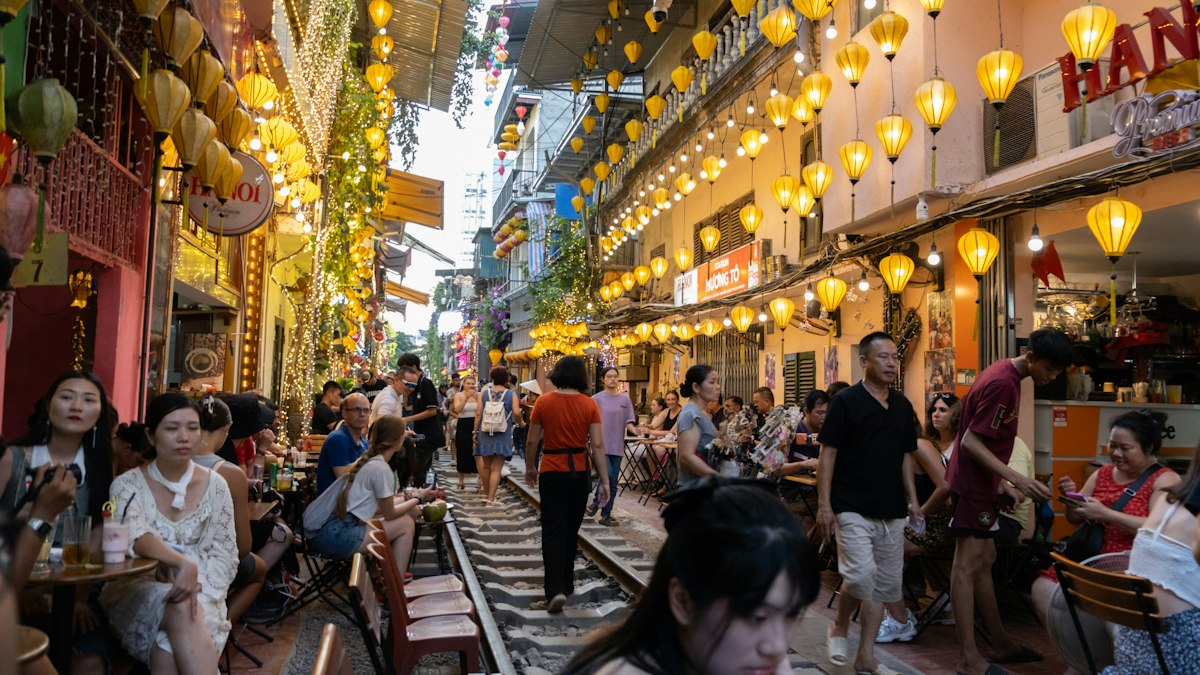
Hanoi’s railway cafés often appear on social media, but access rules and safety controls around the tracks can change. Do not enter restricted sections or stand on active railway lines for a photograph. Ask your accommodation about the latest local situation and follow barriers or staff instructions.
For something less staged, join a cooking class, take a guided food walk or visit a fresh market with someone who can explain unfamiliar ingredients. Look for small groups and guides who discuss food culture, not merely shuttle you between tastings.
Is Hanoi too hectic for a first visit?
Hanoi can feel intense for a first-time visitor, but it becomes manageable when you slow down and plan fewer stops. The traffic is loud, the weather can sap your energy, and navigation occasionally turns into a debate with a pavement full of scooters. None of that means you are doing it wrong.
Use a few simple tactics:
- Stay within walking distance of the area you most want to explore.
- Build a midday rest into your plans during hot or wet weather.
- Save your accommodation address in Vietnamese for drivers.
- Carry a small amount of toilet paper, hand sanitiser and rain protection.
- Keep valuables secure in crowded markets and busy streets.
- Photograph important travel documents and store copies separately.
- Check local weather alerts and official travel advice before day trips.
Be especially cautious when hiring or riding a motorbike. Traffic conditions differ sharply from those in many visitors’ home countries, and licence, insurance and helmet requirements matter. If you are uncertain, use another form of transport rather than learning in central Hanoi.
How can you stay connected in Hanoi?
An eSIM can make maps, translation and ride bookings easier in Hanoi, provided your phone supports eSIMs and is unlocked. Coverage and performance vary by location, network conditions and building, so check the available network information instead of assuming every street or rural day trip will behave the same way.
Travelling to Vietnam?
- 1 GB per day · 3 days€6.20
- 3 GB per day · 1 day€6.30
- 5 GB for the whole plan · 3 days€7.10
Before travelling:
- Confirm eSIM support in your phone’s settings or manufacturer documentation.
- Check that the handset is not locked to your home network.
- Install the eSIM while you still have reliable Wi-Fi.
- Save the activation details somewhere accessible offline.
- Label your SIMs clearly so you know which line handles data.
- Turn off data roaming on your home SIM if you want to avoid accidental use.
After landing, select the travel eSIM for mobile data and enable roaming for that line if its setup instructions require it. Keep your home number active only if you need calls or verification messages, and check your phone’s settings to make sure it is not switching data lines automatically.
Travelling to Vietnam?
Get an eSIM with instant data and land already connected.
Stay connected wherever you travel
Instant eSIM data plans, wherever you're going. No physical SIM, no roaming surprises.