 MochiSim
October 10, 2026
Chiang Mai Travel Guide: Temples, Food and the North
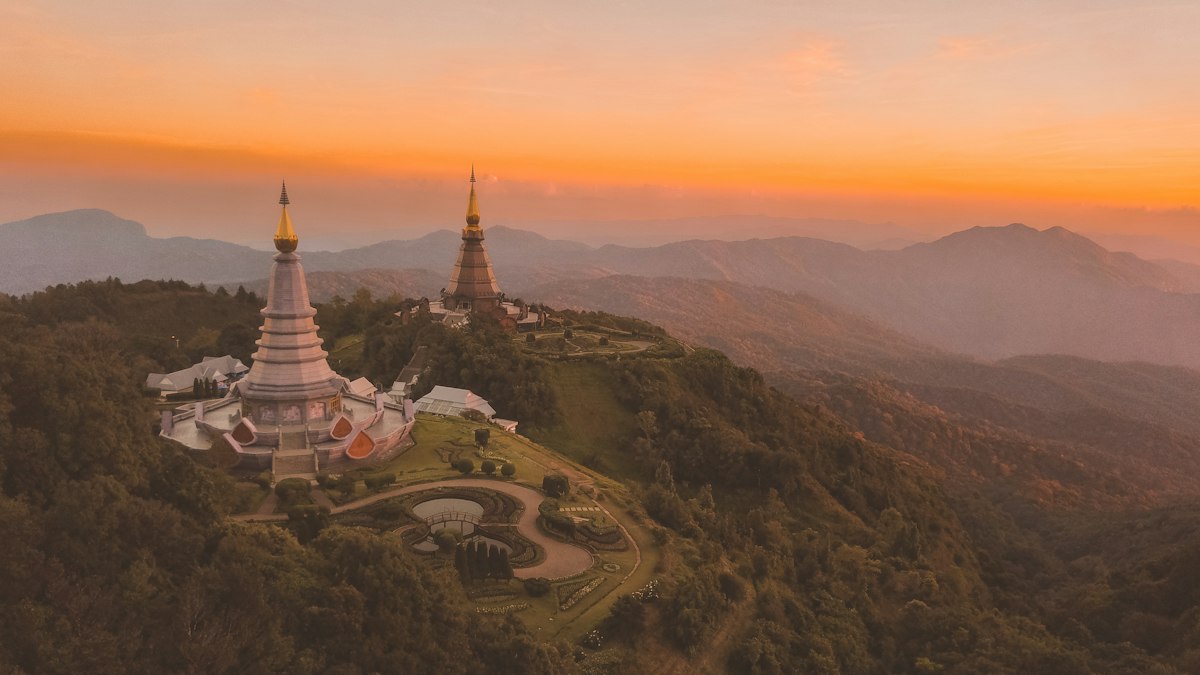
Three days is enough to cover the best of Chiang Mai: the Old City temples, Doi Suthep, the night markets and a plate or four of khao soi. Add a fourth day if you want Chiang Rai or a sanctuary visit, and think twice about February to April, when smoke from seasonal burning can spoil the air.
Chiang Mai is the main city of northern Thailand, sitting inside a square moat with a compact, walkable Old City at its centre. It is cooler and slower than Bangkok, and its appeal is mostly in small things: temple courtyards, market stalls, cafes and a mountain on the doorstep. Plan around the days of the week, because some of the best markets only run on certain evenings.
How many days do you need in Chiang Mai?
Three days at an easy pace works well. Day one for the Old City and a night market, day two for Doi Suthep and the Nimman area, and day three for one bigger outing: an elephant sanctuary, a cooking class or the drive up to Doi Inthanon, Thailand's highest peak. Doi Inthanon is noticeably cooler than the city, so pack a layer.
A fourth day suits a Chiang Rai trip. Stay longer only if you want slow cafe days or a base for mountain roads.
Timing matters more than length. Burning season runs roughly from February to April, with the worst smoke usually in the second half of March. It can ease after Songkran in mid-April or with the first rains in May. The air is generally much better the rest of the year, and the cooler months of November to February are the popular choice. If you do come in smoke season, check the air quality index each morning, carry proper N95 masks and keep strenuous plans flexible.
Which temples are worth your time?
Start inside the Old City, entering through Tha Phae Gate. Wat Chedi Luang and Wat Phra Singh are the two Old City temples to prioritise. Both are easy to link on foot in a morning.
Go early to Doi Suthep, the hilltop temple above the city. Shared songthaews leave from near Chang Puak Gate and climb the mountain road. At the top you can take the long stairway of 306 steps or a short funicular. Views are best in the morning, before haze and tour groups build.
Keep it respectful: cover shoulders and knees at temples, and take your shoes off where signs ask you to. Entry fees and opening hours change, so check on arrival.
What should you eat, and where are the night markets?
Northern food is not the same as the Thai dishes most visitors know. The one to find first is khao soi, egg noodles in a coconut curry broth, topped with crispy noodles and served with pickled greens and lime. Also look for:
- Sai oua, a herby grilled northern sausage
- Nam prik noom, a green chilli dip eaten with sticky rice and vegetables
Markets are the easy way to eat widely. The Night Bazaar is open in the evenings. The Sunday Walking Street on Ratchadamnoen Road is the largest, starting in the late afternoon and stretching across the Old City. The smaller Saturday Walking Street on Wualai Road is known for silverwork. Neither runs on weeknights, so line your Old City days up with them. Carry cash for stalls; cards are fine at hotels and malls.
How do you visit elephants ethically?
The short rule: no riding, no shows, and as little contact as possible. Reputable sanctuaries let elephants roam over large areas and keep visitors at a distance or in a limited role. Some people consider any feeding or bathing a grey area, and others accept it, so decide where you stand and ask before you book.
Before paying, check:
- Riding is not offered in any form
- There are no performances or tricks
- Whether touching, feeding or bathing is allowed
- Whether the elephants have space to roam freely
- What the sanctuary's policy on breeding is
Popular places such as Elephant Nature Park need advance booking. Standards in this sector shift quickly, so confirm the current policies directly with the sanctuary rather than trusting older write-ups, including this one.
Are Chiang Rai and Pai realistic day trips?
Chiang Rai is possible but long. By bus it is roughly three and a half hours each way, with frequent departures from the Chiang Mai bus terminal. The main draw is the White Temple, and a fuller day can add the Golden Triangle, where Thailand, Myanmar and Laos meet. Organised tours exist and run well over twelve hours. If you can spare a night in Chiang Rai, you will enjoy it far more.
Pai is about 130 km away on a mountain road famous for its many curves. Minivans take around three to four and a half hours depending on the operator and traffic. That makes a day trip roughly six to nine hours of travel for little time on the ground, so it is better as an overnight. If you get motion sickness, sit near the front and bring tablets. Check return times before you commit.
How do you stay connected in Chiang Mai with an eSIM?
Chiang Mai is easy to navigate with data: maps for the Old City, Grab for rides, translation for menus and live air quality readings. Before you go, check your phone:
- It supports eSIM
- It is carrier unlocked
- Its software is up to date
Travelling to Thailand?
- 15 GB for the whole plan · 7 days€9.70
- 50 GB for the whole plan · 10 days€10.60
Install the eSIM before you fly, at home on Wi-Fi, and switch it on when you land. A MochiSim eSIM is data only, with no phone number, calls or SMS. Keep your home SIM active as your second line so you still receive bank codes and verification texts, and set the eSIM as your mobile data line. Switch off data roaming on the home SIM so nothing is billed by accident.
Travelling to Thailand?
Get an eSIM with instant data and land already connected.
Stay connected wherever you travel
Instant eSIM data plans, wherever you're going. No physical SIM, no roaming surprises.