 MochiSim
July 28, 2026
What Should First-Time Visitors Do in Bangkok?
For a first Bangkok visit, plan each day around one part of the city rather than charging between distant sights. Stay near rapid transit, see the major temples early, use river boats when they make sense, and leave unscheduled time for food stalls, markets and the occasional wrong turn.
Bangkok can feel chaotic at first, but it becomes much easier once you stop treating it as a checklist. Think of it as several neighbourhoods joined by trains, boats and roads that become impressively congested at exactly the moment you are late.
Which Bangkok neighbourhood should you stay in?
Stay near a BTS Skytrain or MRT station unless you have a particular reason to be elsewhere. Being able to walk to a station is often more useful than being close to one famous attraction.
Good first-visit bases include:
- Siam: Convenient for major shopping centres, rapid-transit connections and central sightseeing. It is busy and polished rather than intimate.
- Silom and Sathorn: A useful mix of offices, restaurants, nightlife and transport, with easy access to Lumphini Park and the riverside.
- Sukhumvit: Packed with hotels, food and nightlife along the BTS line. Check the exact side street, because a short distance on a map can become a sweaty trek.
- Riverside: Best for water views, temples and boat travel. Some locations are less convenient for late-night journeys by rail, so inspect the transport options before booking.
- Old Town and Banglamphu: Close to the Grand Palace, Wat Pho and Khao San Road. The historic setting is appealing, though rail access varies by location.
- Ari: Calmer and more residential, with cafés and local restaurants. It suits travellers who do not mind commuting to the headline sights.
Check recent guest comments for street noise, construction and the actual walk to public transport. Bangkok blocks, flyovers and canals have a habit of making apparently simple routes less simple.
Which temples and sights are worth your time?
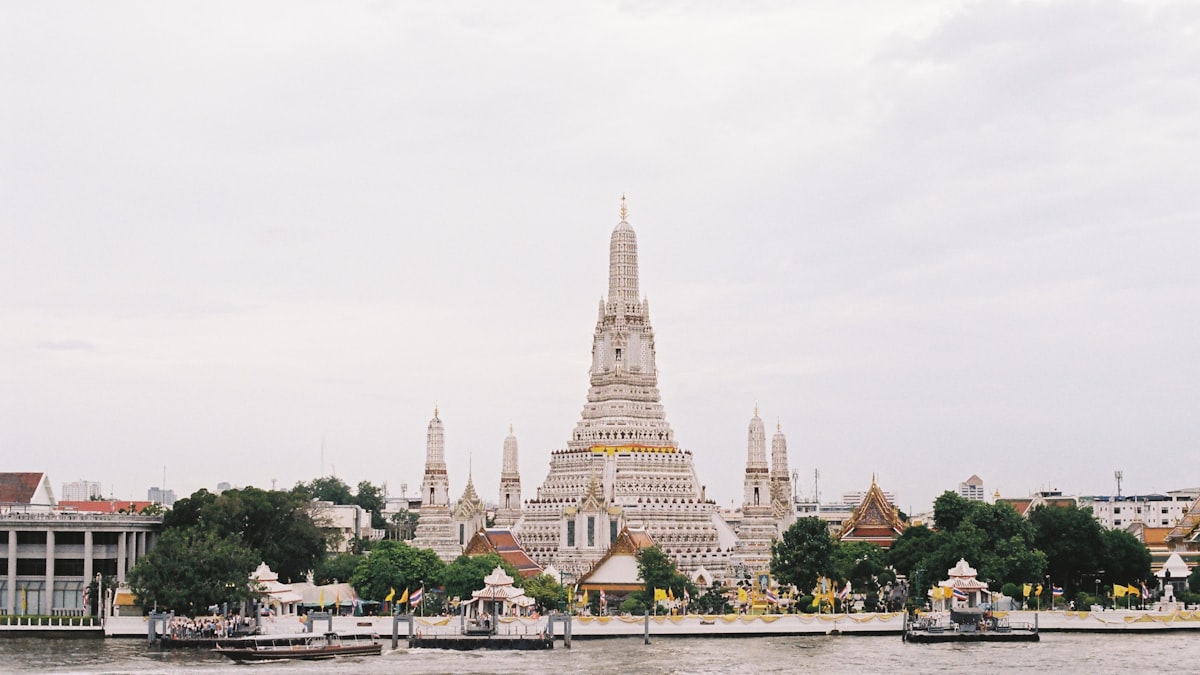
Start with the Grand Palace and Wat Phra Kaew, Wat Pho and Wat Arun, but avoid squeezing all of Bangkok’s temples into one breathless day. These three sit around the historic centre and river, making them sensible to combine.
Wat Phra Kaew contains the Emerald Buddha and has strict clothing rules. Wat Pho is known for its reclining Buddha and extensive temple grounds. Wat Arun stands across the Chao Phraya and is particularly striking from the river. Check official information for current opening arrangements and dress requirements before setting out.
A practical sightseeing sequence is:
- Begin at the Grand Palace area early, before the heat and crowds become more tiring.
- Walk to Wat Pho, allowing time to explore rather than only photographing the reclining Buddha.
- Cross the river by ferry for Wat Arun, checking the current pier and boat arrangements locally.
- Continue by boat or taxi, depending on where you are staying and how much energy remains.
Wear clothing that covers shoulders and knees, choose shoes you can remove easily, and behave quietly around worshippers. Do not climb, lean against sacred objects or pose disrespectfully with Buddha images.
Beyond the main temples, consider the canals of Thonburi, the teak buildings and lanes around old Bangkok, Lumphini or Benjakitti Park, and the galleries and warehouses around the riverside. A canal trip can reveal wooden houses, small temples and waterside life that the main roads hide completely.
How do you get around Bangkok without losing your day?
Use rail for longer cross-city journeys, boats for useful river routes, and taxis or ride-hailing for places beyond the network. No single transport type works best everywhere.
- BTS Skytrain: Useful across central shopping, business and Sukhumvit districts.
- MRT: Connects many central neighbourhoods and sights, including areas around Chinatown and the old city.
- Chao Phraya boats: Practical for riverside attractions, though different services stop at different piers.
- Canal boats: Fast on certain east–west routes, but boarding can be brisk and splashy.
- Taxis and ride-hailing: Helpful late at night or for awkward routes. Use official pickup points and confirm the vehicle details shown in the app.
- Tuk-tuks: Fun for a short ride when you agree on the journey terms first, but not automatically the most practical option.
For Suvarnabhumi Airport, the Airport Rail Link connects towards central Bangkok, while official taxis and app-based services use designated areas. Don Mueang has rail, bus, taxi and app-based options, depending on your destination. Routes and operating arrangements can change, so check the airport’s official guidance before landing.
During peak traffic, a car journey can take much longer than the map suggests. If you have a flight, train or dinner booking, build in slack rather than developing a close personal relationship with the brake lights ahead.
What should you eat, and where should you look?
Eat beyond the familiar pad thai by trying dishes from stalls, food courts, markets and small neighbourhood restaurants. Busy places with steady turnover are usually a more reassuring choice than a lonely tray of food waiting in the heat.
Look for boat noodles, grilled pork skewers, som tam, pad kra pao, khao man gai, tom yum, mango sticky rice and regional curries. Thai dishes can be spicy even when they look harmless, so learn mai phet for “not spicy” and phet nit noi for “a little spicy”. Results may vary. Chilli has its own interpretation of modesty.
Chinatown around Yaowarat Road is excellent for an evening food wander. Pak Khlong Talat offers a colourful look at the flower trade, while Chatuchak is the famous sprawling market for clothes, crafts, household goods and snacks. Check current trading days before making a special journey. Or Tor Kor Market is another useful stop for fruit, prepared food and ingredients.
Choose food cooked in front of you, wash or sanitise your hands, and drink sealed or otherwise reliably treated water if you are unsure of the source. If you have allergies, save a Thai translation explaining them clearly; saying only the ingredient name may not communicate the seriousness.
Where should you shop and go out after dark?
Choose nightlife and shopping by mood because Bangkok offers everything from air-conditioned malls to crowded street markets and quiet riverside bars. You do not need to experience all of it in one evening.
Siam is the obvious shopping district, with connected malls and specialist stores. Chatuchak rewards patient browsing, while Chinatown and neighbourhood markets feel more street-level. For crafts or antiques, research the seller and export rules rather than assuming every old-looking object is genuinely old or can legally leave Thailand.
After dark, Khao San Road is loud and social, Sukhumvit has dense clusters of bars and clubs, and Thong Lo and nearby streets lean towards polished cocktail bars and late dining. Rooftop venues may enforce dress rules, reservations or weather closures, so check directly before travelling across town. The riverside is a calmer alternative, and Chinatown remains lively for food-focused evenings.
Keep hold of your drink, use licensed transport, and confirm your destination before setting off. As in any large city, an invitation from an unusually persuasive stranger deserves a little scepticism.
Is Bangkok too overwhelming for a first visit?
Bangkok is intense, but it is manageable when you plan less and pause more. Heat, traffic, noise and crowds are tiring in combination, especially if you have just stepped off a long flight.
A few habits make the city easier:
- Schedule one major sight and one neighbourhood per half-day.
- Carry water and take indoor breaks during the hottest part of the day.
- Check rain and air-quality conditions before outdoor plans.
- Ignore anyone claiming a major attraction is closed unless an official source confirms it.
- Photograph your accommodation address in Thai for drivers.
- Keep valuables secure in crowded markets and on transport.
- Use marked crossings and footbridges where available; traffic may approach from directions you did not expect.
You can also skip attractions that do not suit you. Floating markets outside central Bangkok often require an early start and considerable travel. If the experience sounds more exhausting than delightful, spend that time exploring a local market or taking a public river boat instead.
Which apps and phone settings should you prepare?
Download maps, translation tools, transport information and a ride-hailing app before you travel. App availability changes, so check recent store listings and official operator pages rather than relying on an old screenshot.
Useful options include Google Maps with offline areas saved, Google Translate with Thai downloaded, LINE for communicating with local contacts, and an established ride-hailing app available in Bangkok. Official BTS, MRT and airport journey planners can help with routes, while your airline’s app is useful for disruption notices.
For mobile data, first check that your phone supports eSIM and is unlocked. Confirm the exact model in the device settings, then compare it with the manufacturer’s documentation and your mobile provider’s lock status; similar model names can have different capabilities.
Travelling to Thailand?
- 15 GB for the whole plan · 7 days€9.70
- 50 GB for the whole plan · 10 days€10.60
Install your travel eSIM while you still have dependable internet, following its activation instructions carefully. Label your SIMs, select the travel eSIM for mobile data, and switch off data roaming on your home line if you want to avoid accidental usage there. Network performance varies with location, congestion, buildings and the local partner network, so keep offline copies of your hotel address, passport details and essential bookings as a backup.
Travelling to Thailand?
Get an eSIM with instant data and land already connected.
Stay connected wherever you travel
Instant eSIM data plans, wherever you're going. No physical SIM, no roaming surprises.