 MochiSim
October 15, 2026
Mobile Data in the Philippines: eSIM Coverage on the Islands

An eSIM is a sensible way to get data in the Philippines, and it works best in island towns and resort areas rather than on open water or remote islets. Expect decent signal where people live and gaps wherever they do not. Nobody can promise coverage on every beach, so treat connectivity as something to plan around rather than rely on.
The country has three mobile networks, Globe, Smart and DITO, and each is strongest in different places. Add thousands of islands, boat-heavy itineraries and a local SIM registration system, and the choice of data plan matters more than it does in a single-city trip.
Which networks does the Philippines have, and does it matter for an eSIM?
The three operators are Globe, Smart and DITO. In Opensignal's mobile network report covering April to June 2026, Globe scored highest for coverage experience, with Smart a close second and DITO well behind on that measure. DITO and Smart took most of the other awards between them, including speed and reliability. Opensignal is clear that its figures reflect where users expect coverage, mostly in cities, and do not measure geographic reach. The report does not look at rural areas or islands at all.
So it does matter, but only a little. Travellers commonly report that Globe and Smart reach more tourist islands than DITO, which is stronger in big cities. Before you buy, check which local network your eSIM plan uses, and be wary of a plan that does not say. If you are heading to a remote area, that detail is worth a minute of your time.
Do I need to register an eSIM under the SIM Registration Act?
Local SIMs sold in the Philippines must be registered to an identity before they work, under the SIM Registration Act. For foreign visitors the rules published when the law took effect ask for a passport, a return or onward ticket and a Philippine address, and a tourist's registered SIM is valid for 30 days. Registration is done through each operator's own portal, and the airport kiosks walk you through it.
The law applies to SIMs issued by Philippine operators. A travel eSIM from a foreign provider is a foreign subscription roaming on a local network, so you install it before you arrive and skip the kiosk entirely. Rules like this change and the details for longer stays or local eSIMs vary, so check the operator's website before you rely on a local SIM.
What is the signal like on Palawan, in El Nido and Coron?
In Puerto Princesa, travellers usually find coverage fine. Head north and it tends to thin out. In the town centres of El Nido and Coron, data generally works, though both get congested and evenings can be slow when everyone is uploading at once.
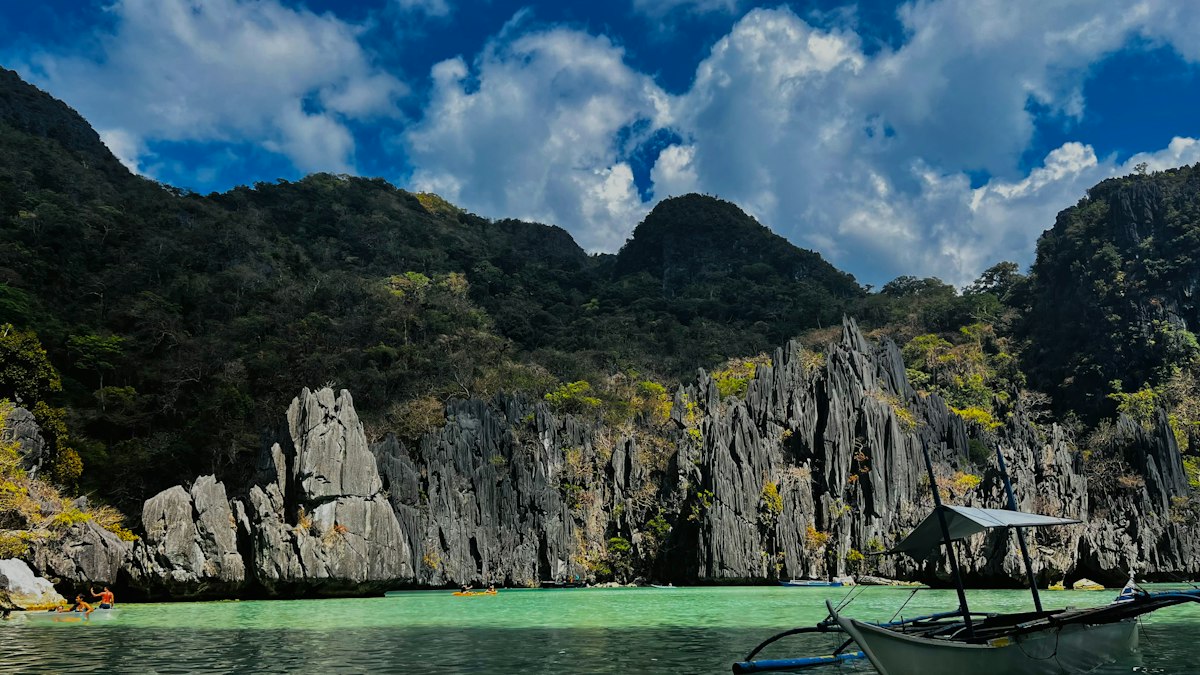
The real gap is the water. On island-hopping boat trips across Bacuit Bay and Coron Bay, people report going hours without a signal. Download offline maps and your boat booking confirmations before you leave the pier, and tell anyone expecting a message that you will be offline for the day.
Will I get a signal in Siargao and Boracay?
Boracay is the easy one. It is a small, heavily visited island, and travellers typically report solid data across the main beaches and town.
On Siargao, General Luna is where most visitors stay and where data usually behaves. It gets patchier at remote surf breaks and quieter corners of the island, particularly on the way to smaller islets. If you plan to ride out to a distant beach on a scooter, save your route offline first.
What about ferries and remote islands?
Ferries tend to keep a signal while they are near a port and lose it in open water. Plan on being offline for most of a long crossing, so queue your downloads, music and messages before departure.
Small and remote islands, such as Apo Island, Kalanggaman or Batanes, are a different story. Some have a single tower and some have none, so assume no signal and treat any data you do get as a bonus. Resorts and homestays often have their own wifi, though it can be slow, so ask before you book if you need to work.
If you want a backup, some travellers carry a local SIM as well as an eSIM, though that brings the registration steps back in.
How much data do I need for island hopping?
Less than you might think, because you will be offline for long stretches. Reports from travellers suggest maps, messaging and general browsing come to a few hundred MB a day, while uploading photos and reels can push that into the gigabyte range. Video calls are the hungriest habit.
A ten-day island trip often lands somewhere in the region of 8 to 15 GB, but that is a rough guide, not a rule. A few habits stretch your allowance:
- Download offline maps for each island before you travel.
- Upload photos on hotel wifi instead of mobile data.
- Turn off auto-play video and background app refresh.
- Check your usage once a day rather than at the end.
- Switch to a bigger plan before you leave town, not on the boat.
If you work remotely, add a margin and expect to plan calls around your location.
How do I stay connected in the Philippines with an eSIM?
Run through this checklist before you fly:
- Your phone supports eSIM.
- It is carrier-unlocked.
- Its software is up to date.
- You have a stable wifi connection for installing.
Travelling to Philippines?
- 3 GB per day · 1 day€6.60
- 1 GB per day · 3 days€6.60
- 3 GB per day · 3 days€7.70
Install the eSIM at home while you have wifi, and switch it on when you land. MochiSim eSIMs are data only, with no phone number, calls or SMS, so keep your home SIM active as a second line. Set the travel eSIM as your mobile data line and turn off data roaming on the home SIM. That way texts and one-time codes from your bank still arrive on the home number, while maps, messaging apps and ride booking run over the eSIM. Check your plan's network before you buy, and keep offline maps ready for the boat days.
Travelling to Philippines?
Get an eSIM with instant data and land already connected.
Stay connected wherever you travel
Instant eSIM data plans, wherever you're going. No physical SIM, no roaming surprises.