 MochiSim
August 8, 2026
Which Philippine Island Should You Visit?
Choose Palawan for dramatic scenery and island-hopping, Boracay for an easy beach holiday, Cebu for the broadest mix of activities, Siargao for surf and a sociable atmosphere, or Bohol for nature without giving up comfortable beach time. None is best at everything, so base your choice on what you want to do after the first hour of admiring the sea.
Which island fits your trip best?
Palawan suits scenery-seekers, Boracay beach lovers, Cebu active travellers, Siargao surfers and Bohol anyone wanting a balanced first visit. The differences become clearer when you picture an ordinary day rather than the postcard.
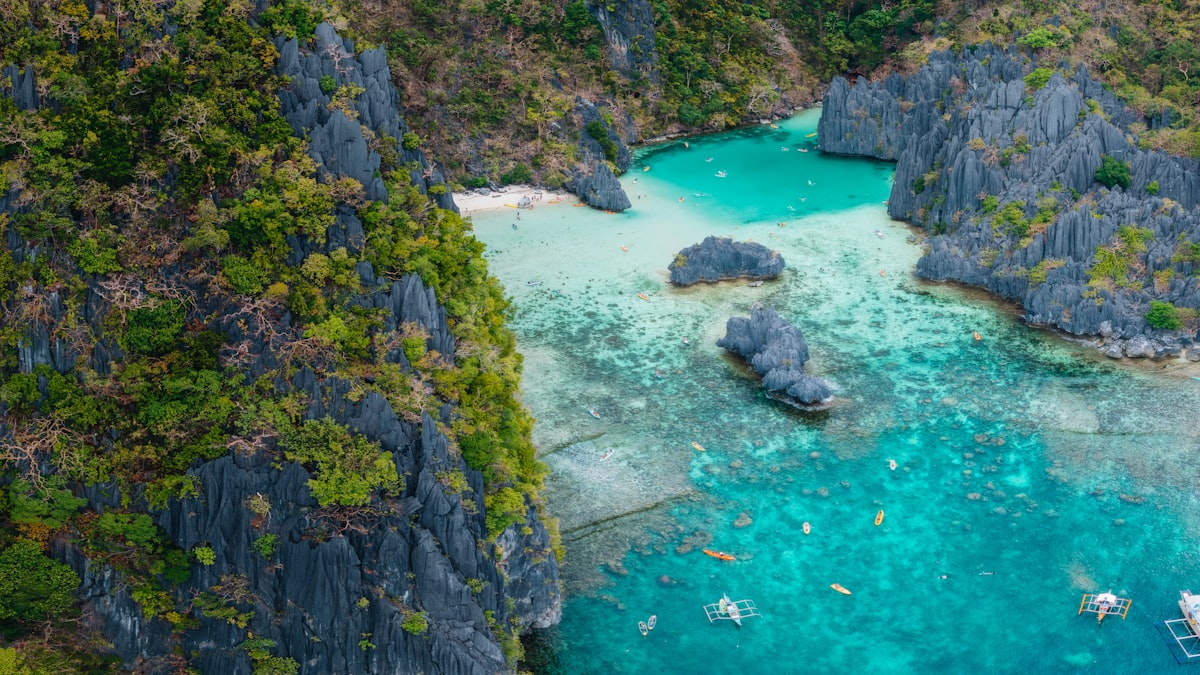
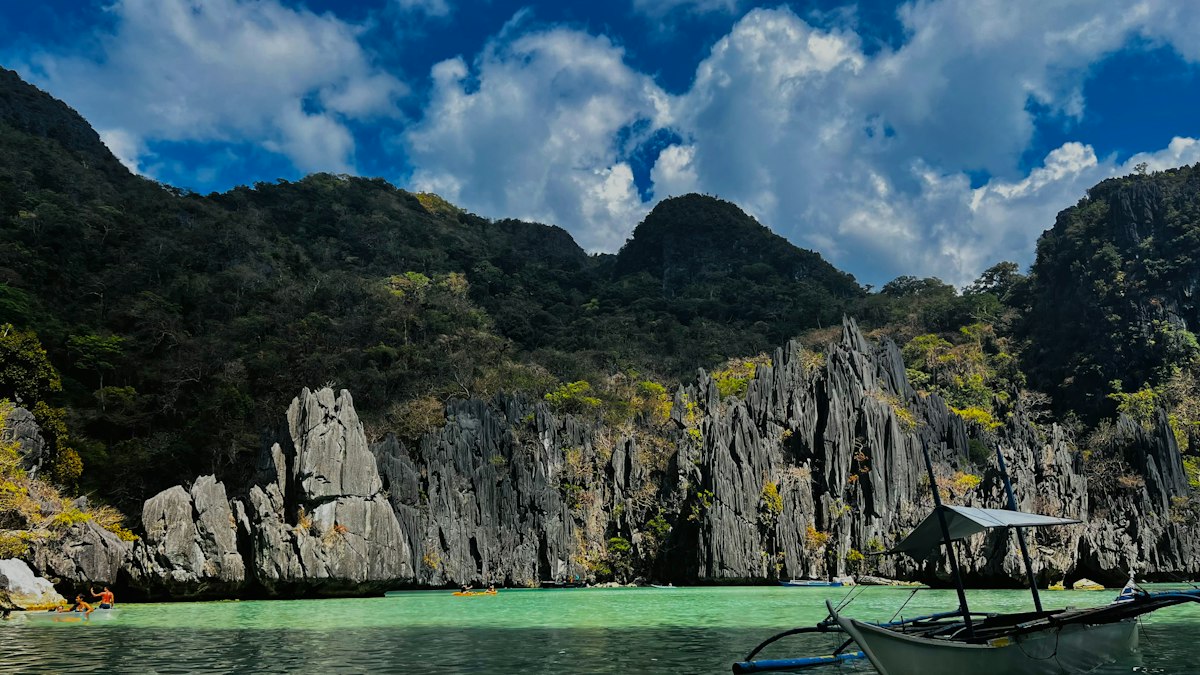
- Palawan: boat trips among limestone cliffs, lagoons, reefs and quieter evenings. Best for couples, photographers, divers and travellers who do not mind moving between bases.
- Boracay: long beach days, water activities, restaurants and the liveliest nightlife of these choices. Best for a straightforward resort-style break or a social trip with friends.
- Cebu: diving, waterfalls, city life, heritage sites and access to several coastal areas. Best if your group wants different things or you prefer an active itinerary.
- Siargao: surfing, island-hopping, lagoons, cafés and evenings around General Luna. Best for surfers, solo travellers and people happy with an unhurried rhythm.
- Bohol: the Chocolate Hills, wildlife encounters, countryside trips and Panglao's beaches. Best for families, couples and first-time visitors who want variety without constant repacking.
Your arrival airport is only part of the calculation. Some of the loveliest places require another road journey, ferry or boat transfer, and that final leg can feel surprisingly long after a flight.
Is Palawan worth the extra travelling?
Palawan is worth it when limestone landscapes, boat trips and diving are the main point of your holiday. It is less suitable if you want one compact base with everything outside the hotel door.
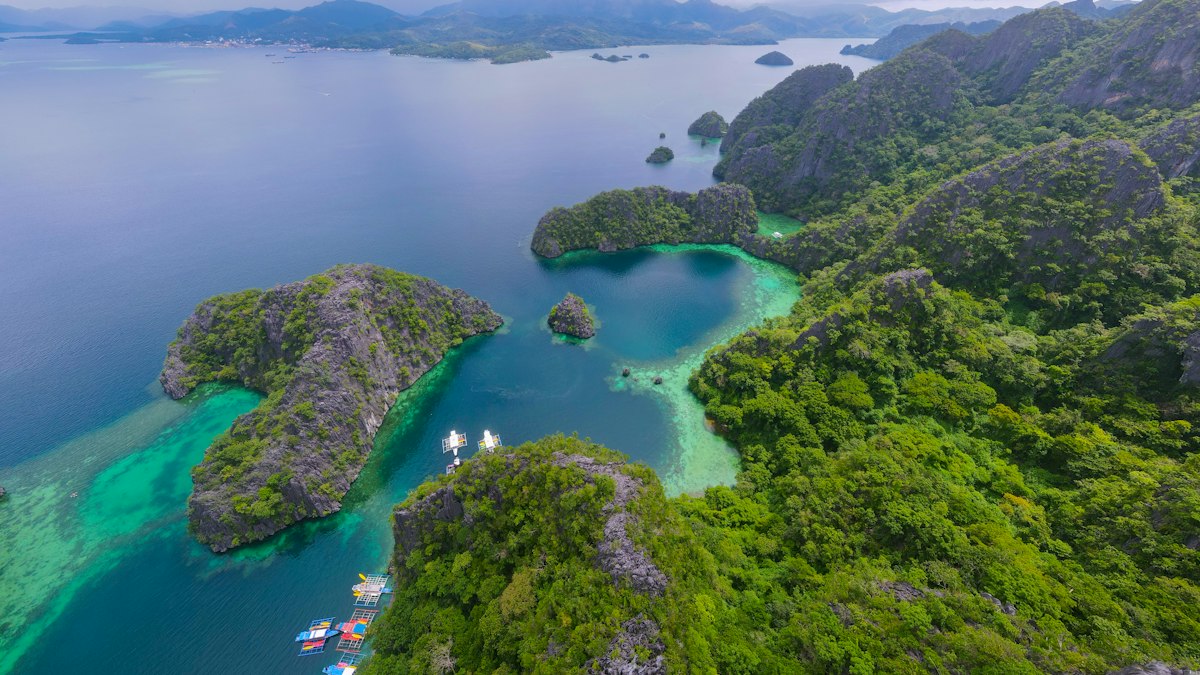
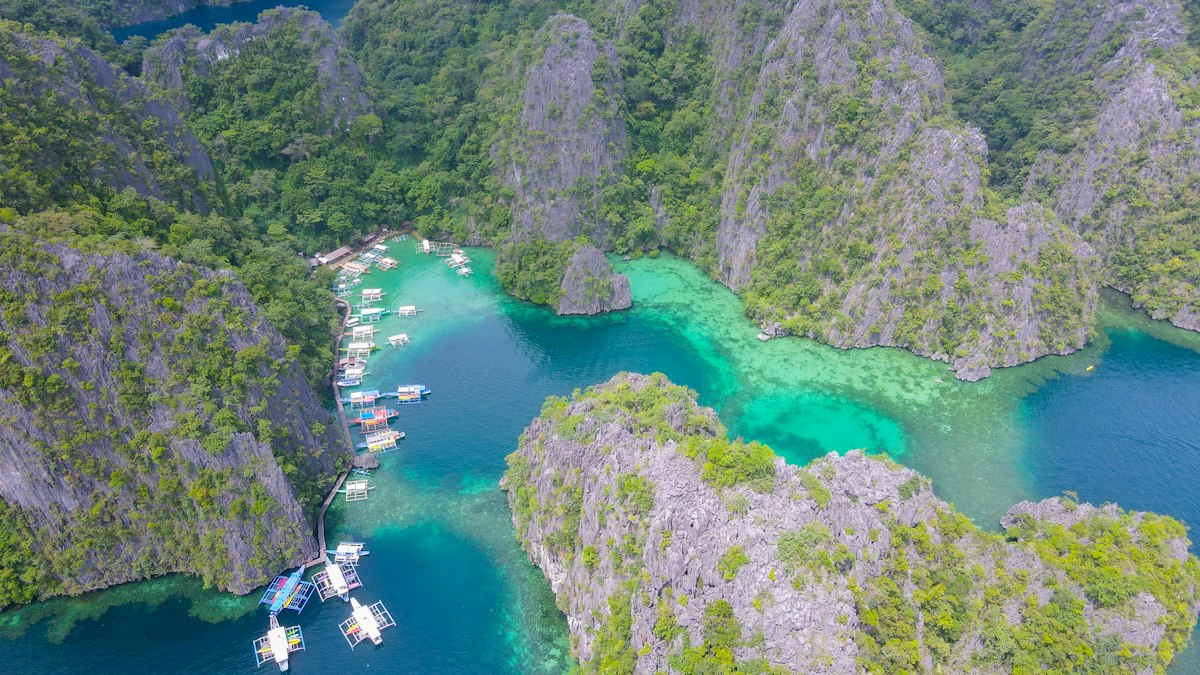
Palawan is a province and archipelago rather than one tidy resort island. El Nido is known for island-hopping through lagoons and karst scenery, while Coron is associated with wreck diving, clear lakes and trips around nearby islands. Puerto Princesa is the gateway for the Underground River and other parts of the main island.
This spread is both Palawan's appeal and its mild logistical nuisance. Trying to squeeze El Nido, Coron and Puerto Princesa into a short visit can turn your holiday into a study of departure lounges and transfer vans. Pick one area if time is limited.
Divers should check local operators, site conditions and required certification before booking. Wildlife, visibility and sea conditions vary, so no responsible operator can make every underwater sighting appear on command.
Should you choose Boracay or Cebu?
Choose Boracay for a polished beach-focused stay; choose Cebu when you want beaches plus diving, waterfalls, history and city energy. They can both be busy, but they deliver very different kinds of trip.
Boracay is compact and easy to understand. White Beach is the centre of gravity, with swimming, sunsets, water activities, restaurants and nightlife close together. You can unpack once and largely forget about logistics. That convenience also means less sense of exploration, especially around the busiest parts of the beach.
Cebu asks more planning but rewards it with range. Cebu City offers urban life and heritage, Mactan has coastal resorts and dive access, and places such as Moalboal draw snorkellers and divers. The sardine aggregation is a natural phenomenon rather than a scheduled performance, so sightings and conditions should always be checked locally. Canyoneering and waterfall trips require reputable guides, suitable conditions and a realistic view of your own fitness.
For nightlife, Boracay keeps beach bars and evening venues within a relatively small area. Cebu's nightlife is more dispersed, with city venues quite separate from many of the province's diving and beach bases. Do not book a quiet coastal stay and assume you can casually pop into the city for the evening; the map may look more cooperative than the road feels.
Is Siargao only for surfers, and is Bohol too quiet?
Siargao works without a surfboard, while Bohol has enough activity for several days without becoming a party island. Both suit travellers who want nature and beaches, but their personalities differ.
Siargao's reputation rests on surfing, particularly around Cloud 9, yet non-surfers still have island-hopping, lagoons, mangroves and coastal roads to explore. General Luna has cafés, restaurants and a sociable evening scene, making it especially friendly for solo travellers. Surf conditions change with season and weather, and beginners should use a qualified local instructor rather than copying whoever looks confident from the shore.
Bohol feels more structured. You can combine Panglao's beaches and diving with countryside trips to the Chocolate Hills, rivers and tarsier conservation sites. Choose wildlife centres carefully: responsible places prioritise the animals, prevent touching and control noise. Panglao has restaurants and some nightlife, but travellers seeking late evenings every night will generally find Boracay or parts of Cebu livelier.
Bohol is often the easier compromise for families or couples with mixed interests. One person gets a beach afternoon, another gets a countryside outing, and nobody has to pretend that six consecutive days of surfing was their idea.
Are the popular Philippine islands too touristy?
The main hubs can feel crowded, but popularity does not make the whole destination a write-off. It does mean you should arrive with realistic expectations and make a few deliberate choices.
White Beach, El Nido's boat departure areas, General Luna and Panglao's busiest strip are established visitor centres. That brings useful services and plenty of operators, along with traffic, queues and rather more laminated menus than paradise photography tends to show.
To find a calmer version of these places:
- Stay outside the busiest centre, provided you are comfortable arranging transport.
- Ask operators about group size, route timing and environmental rules before booking.
- Build in an unscheduled morning instead of stacking organised tours back to back.
- Avoid touching coral, feeding wildlife or standing on reefs for photographs.
- Check current local access rules, because protected beaches, lagoons and dive sites may restrict visits when conditions require it.
Quieter does not automatically mean better. Remote accommodation can involve fewer restaurants, longer transfers and weaker mobile reception. Sometimes the busy base is exactly what you need, particularly on a short first trip.
How should you plan a multi-island trip?
Plan around transport links and a small number of bases, not a wish list copied from a map. Philippine geography has a habit of making nearby-looking places inconvenient to combine.
- Choose your priority experience. Start with diving, surfing, nightlife, scenery or family-friendly sightseeing rather than an island name.
- Select one main base. Give it enough time for weather changes and a day without a fixed programme.
- Check the complete transfer. Include the journey from airport or ferry terminal to your accommodation, not merely the flight or sailing.
- Add one contrasting destination. Boracay and Cebu, for example, offer more contrast than two rushed beach stops with similar activities.
- Leave breathing room before an international flight. Ferries, boats and domestic services can be affected by weather or operational changes.
- Confirm conditions close to departure. Check official transport notices, accommodation instructions and tour guidance rather than relying on an old itinerary online.
If you have only a few days, one island is usually enough. A longer trip makes combinations more sensible, but every transfer still consumes part of a day that could have been spent in the water.
Will an eSIM work across the Philippine islands?
An eSIM will usually be useful in towns and established visitor areas, but you should expect weaker or absent service offshore and in remote terrain. A lagoon surrounded by limestone is beautiful; it is not considerate about signal bars.
Travelling to Philippines?
- 3 GB per day · 1 day€6.60
- 1 GB per day · 3 days€6.60
- 3 GB per day · 3 days€7.70
Before travelling, check that your phone:
- supports eSIM installation;
- is unlocked for use with another network;
- appears on the manufacturer's compatibility information;
- has the required eSIM line and data-roaming settings enabled according to the provider's instructions.
Install the eSIM while you still have reliable Wi-Fi, keep the QR code or installation details somewhere accessible offline, and label your home and travel lines clearly. You can usually keep your regular SIM active for messages while directing mobile data through the eSIM, but roaming settings and charges on the home line remain your responsibility.
Download boarding passes, accommodation details and offline maps before boat trips or long road journeys. Mobile service can vary by island, building, weather and local network conditions, and an eSIM cannot create coverage where the underlying network has none.
Travelling to Philippines?
Get an eSIM with instant data and land already connected.
Stay connected wherever you travel
Instant eSIM data plans, wherever you're going. No physical SIM, no roaming surprises.