 MochiSim
August 11, 2026
What Should You Do, Eat and See in Kuala Lumpur?

In Kuala Lumpur, start with the Petronas Towers and the old civic centre, then explore the city through its food-heavy neighbourhoods. Rail is usually your best defence against traffic, while markets, air-conditioned malls and a few well-chosen apps make the heat much easier to handle.
KL can feel disjointed at first. A glittering tower, a mosque and a row of kopitiams may sit within the same afternoon, yet crossing between them can involve a train, a covered walkway and one slightly confusing pavement. Do not try to conquer the whole map at once.
What should you see first in Kuala Lumpur?
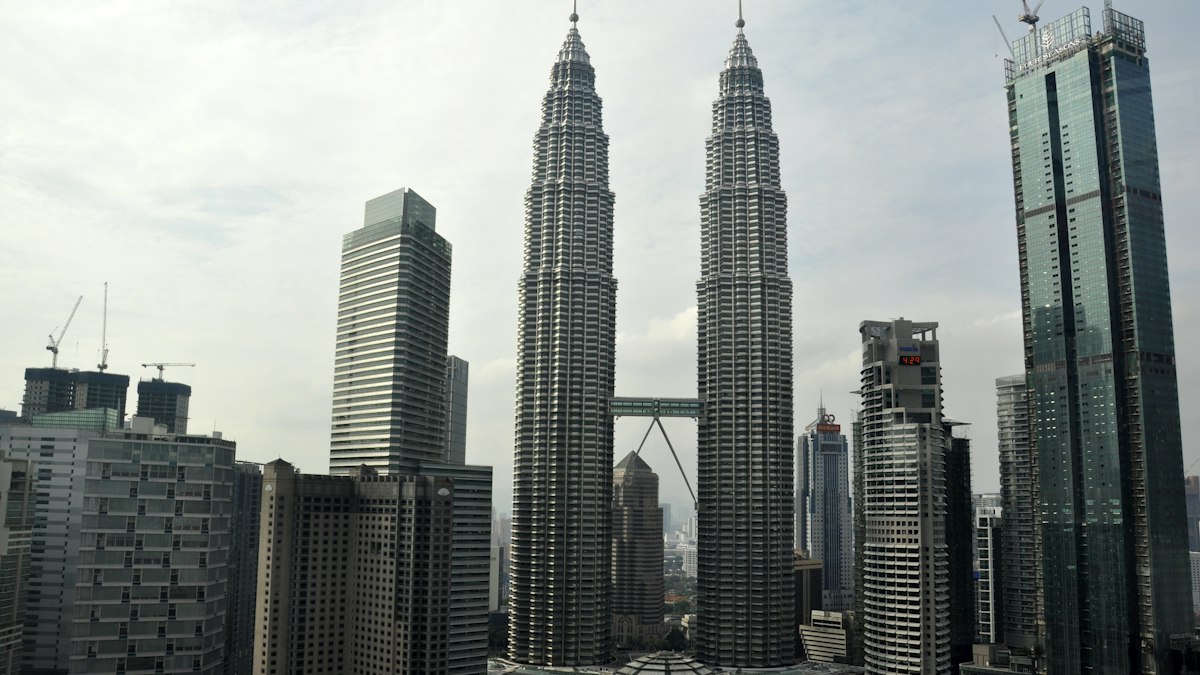
Begin with the Petronas Towers, Merdeka Square and the neighbouring historic streets. Together, they introduce both sides of central Kuala Lumpur: the polished modern skyline and the lower-rise districts where the city developed.
At the Petronas Towers, the park outside gives you the classic upward view without requiring a ticket. Access to the skybridge and observation areas is timed and can sell out, so check the official website before committing your day. After dark, the towers are illuminated, and the park becomes a pleasant place to walk once the temperature eases.
For older Kuala Lumpur, head towards Merdeka Square, the Sultan Abdul Samad Building and Masjid Jamek. From there, you can continue on foot towards Central Market and Petaling Street. Religious sites may require covered shoulders and knees, and visitor access can change during prayers or events.
Other worthwhile stops include:
- Islamic Arts Museum Malaysia for textiles, manuscripts and intricate architectural models.
- Perdana Botanical Gardens for a greener break near the museum district.
- Thean Hou Temple for ornate architecture and elevated city views.
- Batu Caves, just beyond central KL, for the limestone setting, Hindu shrines and many steps. Dress respectfully and keep food away from the monkeys, who conduct themselves with the confidence of seasoned pickpockets.
Which Kuala Lumpur neighbourhood should you explore?
Choose neighbourhoods according to what you want to do rather than treating “central KL” as one walkable district. Distances can look modest on a map but become less appealing in midday heat or beside a multi-lane road.
- KLCC suits first-time visitors who want the towers, city parks, major malls and convenient rail access.
- Bukit Bintang is the busy entertainment and shopping district, with restaurants, malls and Jalan Alor nearby. A covered pedestrian route links much of the area with KLCC.
- Chinatown works well for heritage buildings, temples, cafés, Petaling Street and Central Market.
- Brickfields is Kuala Lumpur’s Little India, known for banana-leaf meals, sweets, flower garlands and its proximity to KL Sentral.
- Kampung Baru offers Malay food and traditional houses against a modern skyline. It is particularly atmospheric in the evening.
- Bangsar has cafés, restaurants and nightlife away from the busiest sightseeing zone, though you may rely more on short rides between places.
Staying near a rail station is usually more useful than staying beside one particular attraction. Before booking accommodation, check the walking route on street view as well as the distance. A nearby station is less helpful if the route involves an awkward road crossing with luggage.
Where should you eat in Kuala Lumpur?
Eat across several neighbourhoods rather than searching for one supposedly definitive food street. Kuala Lumpur’s strength is its mix of Malay, Chinese and Indian cooking, along with dishes shaped by generations of exchange between those communities.
Good starting points include nasi lemak, roti canai, banana-leaf rice, char kway teow, satay, curry laksa and cendol. Kopitiams are useful for breakfast or a simple coffee break, while hawker centres let a group order from different stalls without a diplomatic incident.
Jalan Alor is convenient and lively, especially if you are staying in Bukit Bintang, but it is also firmly on the visitor trail. For a broader look at local food, explore Brickfields, Kampung Baru and the streets around Chinatown. Chow Kit Market is better for seeing fresh produce, spices and everyday shopping than for a polished tourist experience. Wear closed shoes if you are visiting wet-market areas.
A few practical food notes:
- Do not assume every stall is halal simply because you are in Malaysia; look for certification or ask.
- Vegetarian can mean different things, particularly where stocks, shrimp paste or fish sauce are involved.
- If you have a serious allergy, carry a translated explanation and confirm ingredients rather than relying on menu symbols.
- Busy stalls with steady turnover are generally a sensible choice, but use your judgement around food that has been sitting in the heat.
Where should you shop without spending all day in a mall?
Combine one modern mall with one market or traditional shopping street. Kuala Lumpur’s malls are useful for meals, pharmacies, supermarkets and a blast of air conditioning, not merely fashion shopping.
Bukit Bintang has several major malls within a compact area, while Suria KLCC sits beneath the Petronas Towers. For crafts and souvenirs, Central Market is easier to browse than the dense lanes of Petaling Street. Brickfields is good for Indian groceries, fabrics and sweets, and Chow Kit offers a more everyday market atmosphere.
Check airline restrictions before buying food products to take home, especially anything fresh, liquid or strongly scented. Durian has a particular talent for becoming everyone else’s problem and may be prohibited in hotels or on public transport.
How do you get around Kuala Lumpur and from the airport?
Use urban rail for predictable cross-city journeys, then walk or take a ride-hailing car for the final stretch. Kuala Lumpur has MRT, LRT, monorail and commuter rail services, but they do not all feel like one seamless system, so allow time for transfers.
A reloadable Touch ’n Go card is widely useful on public transport, though payment methods and purchase locations can change. Check the current rules with the operator, and do not assume a foreign contactless bank card will work at every gate. Grab is commonly used for ride-hailing, but road traffic can make a short-looking journey surprisingly slow.
For airport transfers:
- KLIA Ekspres connects Kuala Lumpur International Airport with KL Sentral and avoids road congestion.
- KLIA Transit serves additional stations, so confirm which service suits your stop.
- Airport coaches can be practical if their destination is near your accommodation, but check the current timetable.
- Taxis and ride-hailing cars are useful for groups or door-to-door travel. Follow airport signs to the designated pickup area and verify the vehicle details in the app.
Kuala Lumpur International Airport has more than one terminal, and some travellers also use Sultan Abdul Aziz Shah Airport in Subang. Check the airport code and terminal on your booking before setting off. This sounds painfully obvious until you are standing at the wrong terminal with a boarding pass and a rapidly deteriorating mood.
Do you really need mobile data in Kuala Lumpur?
You can manage without constant mobile data, but it makes transport, ride-hailing and last-minute opening checks much easier. Public Wi-Fi exists in hotels, malls and cafés, yet it may not be available precisely when you need to find an airport pickup point or message your host.
Travelling to Malaysia?
- 3 GB per day · 1 day€5.90
- 1 GB per day · 3 days€6
- 3 GB per day · 3 days€7.10
Before travelling, confirm that your phone supports eSIM and is unlocked for use with another network. Coverage and performance vary by location, building and local network conditions, so no setup can promise a perfect signal everywhere.
Useful apps and downloads include:
- Grab for ride-hailing and some local deliveries.
- Google Maps or Apple Maps for navigation, with central KL saved offline as a backup.
- A public transport journey planner, ideally one currently recommended by Kuala Lumpur’s transport operators.
- Google Translate or another translation app with Malay downloaded offline.
- WhatsApp for accommodation messages, drivers and group-chat logistics.
Install your eSIM while you still have reliable Wi-Fi, but follow its activation instructions carefully because installation and activation are not always the same step. Save the QR code or manual setup details somewhere accessible from another device. Also screenshot your hotel address and airport transfer instructions. Screenshots are not glamorous, but neither is circling a taxi rank after a long flight.
How can you organise three days in Kuala Lumpur?
Group each day geographically so you spend less time crossing the city. A simple first visit could look like this:
- Start with modern KL. Visit the Petronas Towers area, walk through KLCC Park and continue to Bukit Bintang using the covered pedestrian route. Eat around Jalan Alor or nearby streets in the evening.
- Explore the historic centre. Begin around Merdeka Square and Masjid Jamek, then walk towards Central Market and Chinatown. Continue to Brickfields for dinner if you still have energy.
- Choose an outer sight and a local neighbourhood. Visit Batu Caves early, then return for the Islamic Arts Museum, Perdana Botanical Gardens or a meal in Kampung Baru.
KL’s rain can be sudden and heavy, so keep an indoor alternative for each afternoon. Museums and malls are obvious fallbacks; trying to out-stubborn a tropical downpour rarely improves a holiday.
Travelling to Malaysia?
Get an eSIM with instant data and land already connected.
Stay connected wherever you travel
Instant eSIM data plans, wherever you're going. No physical SIM, no roaming surprises.