 MochiSim
August 22, 2026
Where Should First-Time Travellers Go in Indonesia?
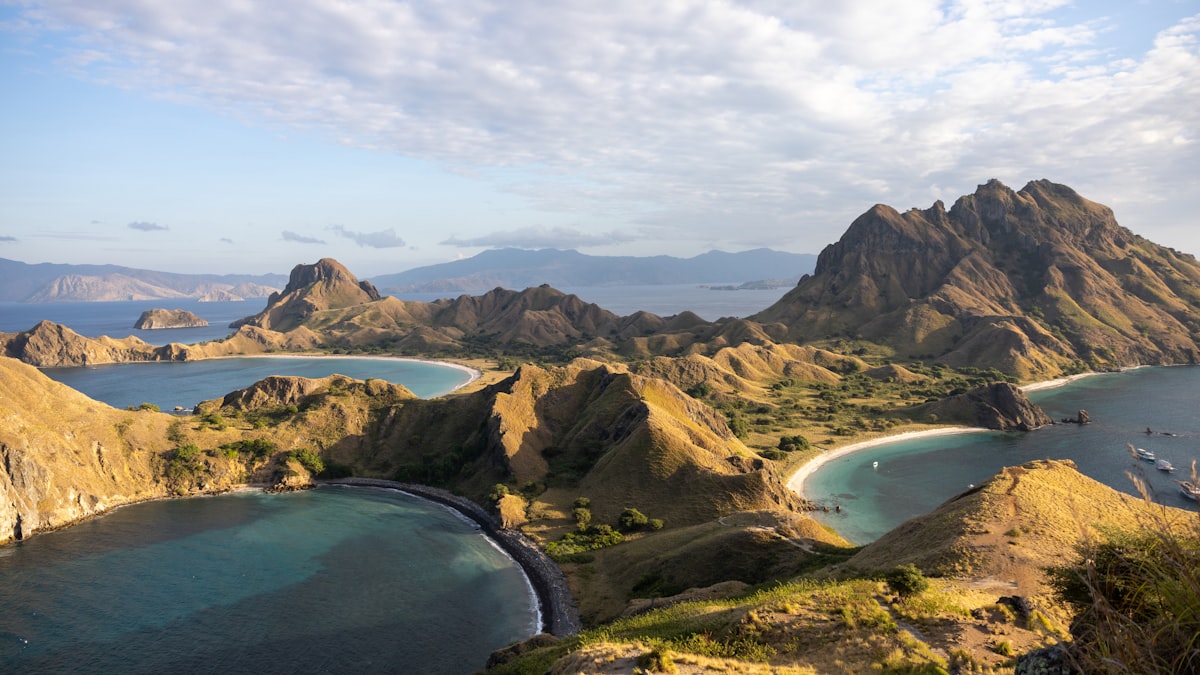
For a first trip to Indonesia, Bali and Ubud make the easiest starting pair, while Komodo and Lombok add wilder landscapes without demanding an expedition. Jakarta suits travellers drawn to food and big-city life; Raja Ampat is the ambitious choice for diving, remoteness and an itinerary built around the journey itself.
Indonesia is enormous, so resist the urge to treat these places as neighbouring stops. Pick two or three areas for a shorter holiday. You will see more by moving less, and spend fewer mornings staring at an airport departure board while your beach clothes remain optimistically packed.
Which Indonesian destination suits your trip?
The right choice depends less on a universal ranking than on what you want to do each morning.
- Bali: Best for first-time visitors who want beaches, temples, restaurants and a broad choice of places to stay. Allow roughly five to seven nights if it is your main destination.
- Ubud: Best for culture, crafts, wellness, rice-field walks and a greener inland setting. Two to four nights works well alongside the coast.
- Komodo: Best for dramatic islands, boat trips, snorkelling, diving and seeing Komodo dragons with a guide. Give the Labuan Bajo area at least three nights, more if you want a longer boat journey.
- Jakarta: Best for Indonesian food, museums, shopping and understanding the scale of urban Indonesia. Two or three nights is usually enough for a first visit.
- Lombok: Best for quieter beaches, surfing, waterfalls and mountain scenery. Four to six nights lets you explore beyond one resort area.
- Raja Ampat: Best for experienced divers, snorkellers and nature-focused travellers comfortable with complicated transfers. A week or more makes the travel effort easier to justify.
Those durations are practical suggestions, not rules. Domestic journeys can consume much of a day once transfers, waiting and weather are involved, so leave breathing room between important connections.
Why do most first trips begin with Bali and Ubud?
Bali and Ubud give you the broadest introduction with relatively little logistical friction. They belong to the same island, but they deliver noticeably different trips.
Coastal Bali ranges from lively neighbourhoods filled with cafés and nightlife to calmer beach areas and cliff-backed shores. Your best base depends on whether you want surfing, swimming, evenings out or early nights. Traffic can make short map distances surprisingly slow, so choose accommodation near the activities you care about rather than planning to cross the island every day.
Ubud sits inland among river valleys, villages and rice fields. Come for temple visits, dance performances, galleries, craft workshops and walks outside the busy centre. It suits couples, solo travellers and anyone keen to swap beach clubs for an early morning trail and the sound of geckos after dark.
A sensible first visit is three or four nights by the coast and two or three in Ubud. Dress respectfully at temples, carry a light layer for sudden rain, and arrange long transfers with enough time to spare. If an animal attraction encourages close handling or staged photographs, look carefully at its welfare practices before taking part.
Is Komodo Island worth adding to a first visit?
Komodo is worth adding if wildlife and seascapes matter more to you than easy, spontaneous travel. Most visitors base themselves in Labuan Bajo on Flores and join a boat trip through Komodo National Park; Komodo Island itself is one possible stop rather than the whole experience.
The landscape is the draw even before a dragon appears: dry ridges, curved bays and startlingly clear-looking water from the viewpoints. Popular activities include guided wildlife walks, snorkelling, diving and island hikes. Conditions at sea vary, and some sites have strong currents, so ask operators where they plan to go and whether each activity matches your ability.
Allow at least three nights around Labuan Bajo, with an extra buffer if you have an onward international flight. Park rules, visitor access and boat arrangements can change. Check current guidance from the park and choose a licensed operator that explains safety procedures, life jackets and what happens if weather disrupts the route. Never approach a Komodo dragon without the ranger’s direction. They look magnificently prehistoric because they are, in practical terms, large wild predators.
Should you spend time in Jakarta?
Jakarta deserves a stop if you enjoy food, history and cities that refuse to be neatly packaged. It is crowded, humid and frequently slow to cross, which is precisely why beach-focused travellers may prefer to connect onwards.
For those who stay, the reward is a wider view of Indonesia. Explore the old harbour district around Kota Tua, visit museums, seek out regional dishes and notice how traditional markets, mosques, malls and towers share the same sprawling city. Two or three nights gives you time to explore without letting traffic dominate the holiday.
Jakarta works especially well for food-minded travellers, repeat visitors and anyone breaking up a long journey. Group sights by area, use established transport or ride-hailing options, and avoid planning a major cross-city transfer immediately before a flight. Keep valuables secure in dense crowds, as you would in any large city.
Is Lombok just a quieter version of Bali?
Lombok has some of Bali’s broad appeal, but its landscapes and pace make it a destination in its own right. The south is known for beaches and surf breaks, while the interior offers villages, waterfalls and views towards Mount Rinjani.
It suits surfers, couples, independent travellers and people who want fewer heavily developed resort areas. Spend four to six nights if you plan to combine the south coast with inland sights; add more for trekking or time on the nearby Gili islands.
Road journeys can be longer than they appear, and beach access or surf conditions may differ with weather and tides. Ask locally before swimming, especially where there is no lifeguard, and check current trekking access if Rinjani is part of your plans. Mountain routes can close because of weather, volcanic activity or conservation rules. A guide may be required or simply sensible depending on the route.
Is Raja Ampat worth the difficult journey?
Raja Ampat is worth the effort for travellers whose main goal is marine life and remote island scenery, but it is not the obvious add-on to a hurried first trip. Reaching it normally involves travelling through Sorong and continuing by boat, followed by another transfer if your accommodation is on an outer island.
This is the place for diving, snorkelling, kayaking, birdwatching and unhurried days near the water. It best suits confident swimmers, experienced divers and patient travellers who can tolerate patchy infrastructure. Non-divers can still have a superb trip, but should choose an island and accommodation with accessible snorkelling and activities they genuinely want.
Allow at least a week in the region, excluding tight onward connections. Ask your accommodation to confirm transfers, permits, meal arrangements, drinking water and available communications before you leave Sorong. Mobile service can be limited on remote islands, and power may not run continuously everywhere. Download documents and maps in advance rather than expecting a signal when you need one.
How should you plan travel and mobile data?
Build your route around geography, then prepare your phone before departure so domestic transfers are easier to manage. A practical first-timer itinerary might pair Bali with Ubud and Lombok, or Bali with a separate Komodo trip. Jakarta fits naturally around a flight connection, while Raja Ampat is better treated as the centrepiece.
- Choose no more than two or three regions. Count transfer days separately from sightseeing days.
- Book the hardest connection first. Remote boats and limited domestic routes deserve more attention than flexible city activities.
- Add a buffer before your flight home. Weather and transport disruption are less charming when an international departure is involved.
- Check that your phone is unlocked and supports eSIM. Confirm the exact model in its settings and on the manufacturer’s regional specification page.
- Install your eSIM while you have reliable Wi-Fi. Follow the activation instructions, label the line clearly and keep your usual SIM active only if you need incoming messages.
- Download offline maps, bookings and translation tools. Coverage usually varies between major cities, popular islands and remote marine areas, so do not rely on a continuous signal.
Travelling to Indonesia?
- 1 GB per day · 3 days€5.90
- 3 GB per day · 1 day€6
- 1 GB per day · 7 days€6.90
An Indonesian eSIM can remove the need to find a physical SIM after landing, but it cannot make a remote island tower appear. Check the current plan details, supported networks and your device settings before purchase. On arrival, select the eSIM for mobile data and enable data roaming for that line if the instructions require it.
Travelling to Indonesia?
Get an eSIM with instant data and land already connected.
Stay connected wherever you travel
Instant eSIM data plans, wherever you're going. No physical SIM, no roaming surprises.