 MochiSim
October 13, 2026
When Is the Best Time to Visit Thailand?
The best time to visit Thailand is usually the cool, dry stretch from November to February, but that answer only holds for half the country. The Andaman coast and the Gulf coast run on different weather, so the right month depends on which beach you are heading for.
Thailand is long, and a single "rainy season" label hides a lot. Tourism authority guidance splits the islands into two windows that pull in opposite directions, while festivals and northern smoke add their own wrinkles. Treat the months below as patterns, not guarantees, and check the Thai Meteorological Department before you book anything non-refundable.
When is the best time for the Andaman coast?
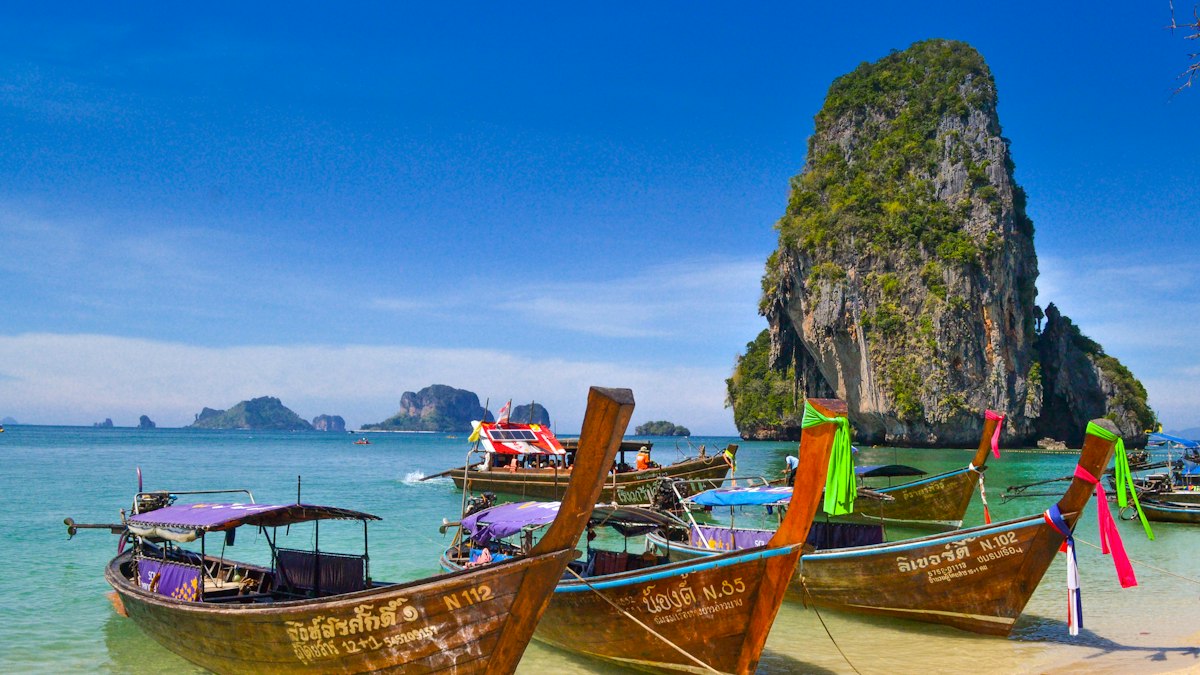
For Phuket, Krabi and Phi Phi, the Thai tourism authority points to roughly November to April as the good window, with calmer seas and clearer water. December to March is the easiest stretch, and also the busiest, so expect higher demand for rooms and boats.
The wetter months fall outside that window, broadly the middle of the year. Rain there is rarely a full washout every day, but rougher seas can affect boat trips and some islands. If you are planning a beach-heavy trip between May and October, keep your schedule flexible.
When is the best time for the Gulf islands?
The Gulf side runs close to the opposite rhythm. The tourism authority lists April to October as the good period for the east coast of the Gulf, which covers Koh Samui, Koh Phangan and Koh Tao. Monsoon conditions there tend to be stronger later in the year, and many travellers find these islands work better from January onwards.
That makes the Gulf a useful fallback when the Andaman is wet. A trip that mixes both coasts can sometimes dodge rain entirely, if you time the move between them.
What are Thailand's three seasons?
Locals talk about three seasons, and the broad shape is simple.
- Cool season, roughly November to February: the most comfortable weather for cities, temples and trekking. Also peak season, so book early.
- Hot season, roughly March to May: hot enough that midday sightseeing becomes a chore. Plan indoor breaks and early starts.
- Rainy season, roughly May to October: green scenery, fewer crowds and often lower demand. Rain tends to arrive as heavy showers rather than all-day drizzle, though this varies by region.
Bangkok sits in the middle of all this. It is hot and humid for most of the year, and the cool season is the gentlest time for walking around.
Is Songkran a good time to go?
Songkran, the Thai New Year, is officially 13 to 15 April, although many cities run celebrations for several days either side. Bangkok, Chiang Mai and Pattaya host the biggest water fights, while quieter options such as Sukhothai or Ayutthaya lean more towards tradition.
It is a lot of fun if you like being soaked, and a poor choice if you want calm streets. Waterproof pouches for your phone are not optional. Dates and programmes can change by city, so check local announcements before you commit. It also falls in the hot season, which explains why the water is welcome.
What about Loy Krathong and the northern burning season?
Loy Krathong follows the lunar calendar and falls on the full moon of the twelfth Thai lunar month, usually in November. For 2026, most calendars place it around 24 to 25 November, but the tourism authority publishes the official dates nearer the time, so confirm before booking. In Bangkok, people float small offerings on the Chao Phraya and in park lakes. In Chiang Mai, the sky-lantern festival Yi Peng lands on the same nights.
The northern burning season is the reason to think twice about the north in spring. NASA's Earth Observatory describes it as running roughly February to April, peaking in March, caused largely by agricultural and forest fires, with mountains trapping the smoke in the valleys. If you want to hike or enjoy mountain views around Chiang Mai, the cool season before the smoke is the safer bet.
So which month should I pick?
A few shortcuts, if you want a direct answer:
- First trip, beaches on the Andaman side: December to February.
- Gulf islands with fewer crowds: roughly April to October, checking the forecast as the year goes on.
- Cities and culture with comfortable weather: November to February.
- Festivals: mid-April for Songkran, November for Loy Krathong.
- Northern mountains: avoid roughly February to April if clear air matters to you.
If you only have one slot in the calendar, late November to early February is the least risky across the country as a whole. Just book earlier than you think, because everyone else reached the same conclusion.
How do I stay connected in Thailand with an eSIM?
You will want data from the moment you land, for maps, ride-hailing and checking weather and ferry updates when plans shift. Before you buy, run through this phone checklist:
- Your phone supports eSIM.
- It is network unlocked.
- Its software is up to date.
Travelling to Thailand?
- 15 GB for the whole plan · 7 days€9.70
- 50 GB for the whole plan · 10 days€10.60
Install the eSIM at home on Wi-Fi so it is ready when you arrive, then switch on the line and data roaming for it once you land. MochiSim eSIMs are data only, with no phone number, calls or SMS. Keep your home SIM active as the second line so verification codes and bank texts still reach you, and set mobile data to use the travel eSIM.
Travelling to Thailand?
Get an eSIM with instant data and land already connected.
Stay connected wherever you travel
Instant eSIM data plans, wherever you're going. No physical SIM, no roaming surprises.